

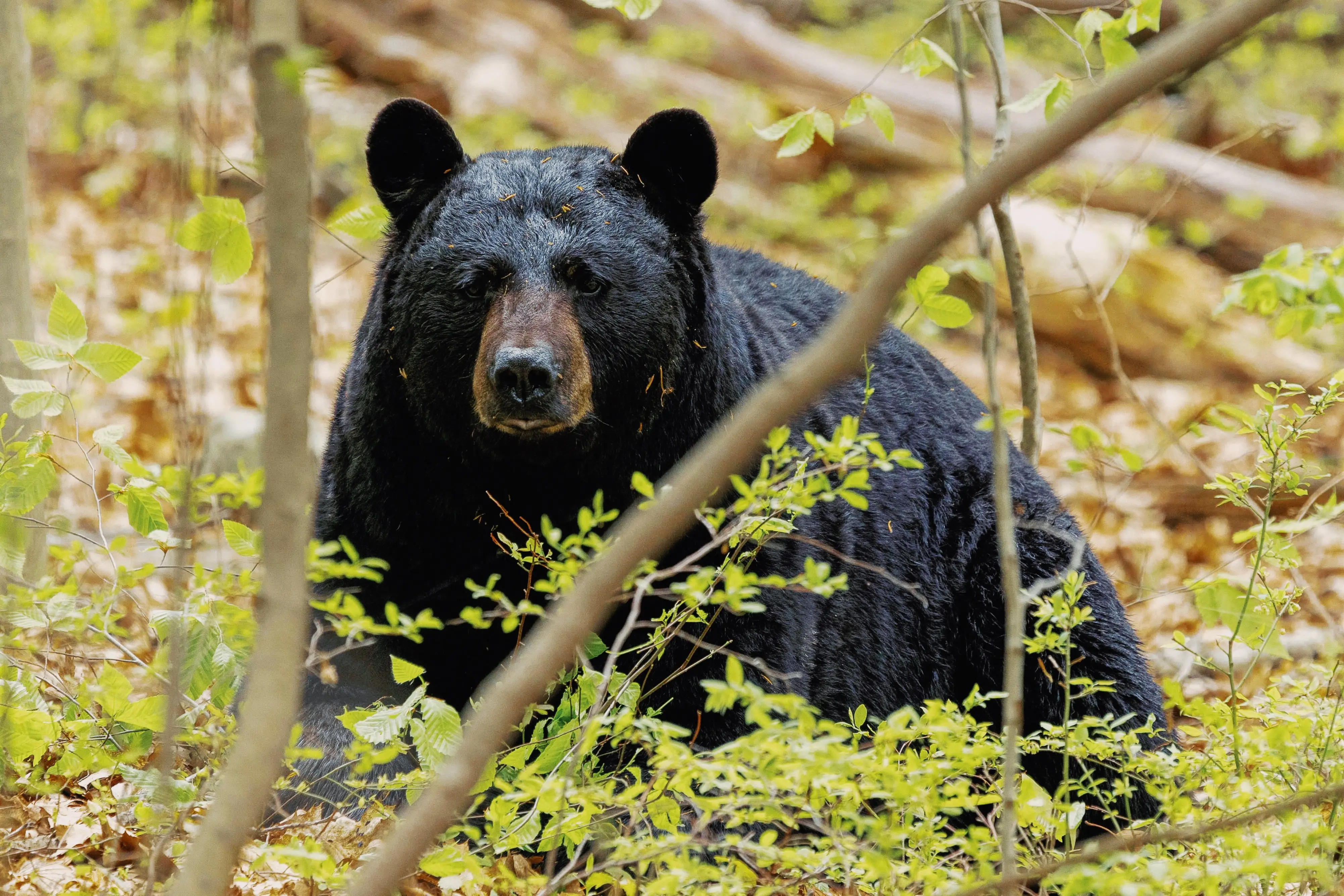
In September, a lot of humans are focused on getting children back to school and teens moved into college. Likewise, black bears are thinking about their families in anticipation of autumn.
Now that fall has begun, bears are experiencing hyperphagia,a biological drive to eat as much as possible to build the fat reserves they will rely on throughout their winter dormancy. Even for bears living in warmer climates who don’t really hibernate, just take it easier and nap a lot, the quest for calories keeps them active and foraging up to 20 hours a day!
Ideally, bears will spend the fall foraging and hunting for nuts, berries, fish and other seasonal natural foods. It’s up to people not to give bears a reason to come looking for food in their yards.
Sadly, human-bear interactions result in bears being killed. In states like New Jersey, New Hampshire and Florida, needless, reckless bear trophy hunts will take place in October and December under the guise of public safety. Many bears won’t make it to winter as a result.
But as we’ve been saying for years, a dead bear can’t teach other bears not to be opportunistic feeders—that’s why we will never stop trying to reform people and get them to adjust their behaviors.
It’s maddening that officials in states that allow bear hunting ignore research from other places like Wisconsin, where it has been determined that hunts do not reduce so-called nuisance complaints.
The reason is bears killed deep in the woods are not the bears who people complain about in more developed areas, where hunting wouldn’t even be safe.
The latest study, “Do Lethal Control Interventions Reduce Human-Wildlife Conflict? Evidence from Black Bears in British Columbia,” reinforces what others have shown— killing black bears doesn’t reduce conflict.
In fact, New Jersey Dept. of Fish and Wildlife Black Bear Activity reports how black bear activity can increase because of hunting. They suspended hunting from 2018-2021. Damage and nuisance reports from those years: 2018 703; 2019 654; 2020 1058; 2021 578. Hunting was reinstated in 2022 and has continued ever since. Damage and nuisance reports from those years: 2022 1753; 2023 1091; 2024 1276.
It is crucial that people identify possible attractants on their property and manage them before they become an issue that gets bears and other wildlife killed. Use this checklist to protect bears and humans in your neighborhood.
- Waste. Wait to put garbage cans out until the morning of pick-up and use bear-proof containers and dumpsters.
- Bird feeders. Remove bird feeders from March through November.
- Fruit trees and berries. Ripened fruit and berries left unpicked or on the ground are common attractants. Pick fruit and berries as they ripen or just before, and if you’re not able to manage the plants, consider asking for help!
- Garden spaces. In areas with bears, deer, and other large wildlife, fence in garden spaces and/or use electric fencing as appropriate. Get an energizer that outputs at least 6,000+ volts. Output joules should be at least 0.5. (The joules rating tells you the amount of energy the fence delivers.) Depending on your location and soil type, a lower joule rating may work. Ask your state wildlife agency for recommendations for your area and what you are protecting.
- Barbecues and eating areas. The grease traps in barbecues are a stinky siren call for bears and other animals. Clean grills after each use and make sure that all food particles are removed. Store clean grills and in a secure area that keeps bears out.
- Pet food. Kibble, wet food or scraps from snacks and treats all attract wildlife. Removing and spraying down eating areas can clean this attractant up quickly.
- Check for access points. Seasonal changes are a great time to look around your property for spaces where animals may be trying to access or den. Under sheds and decks are common zones that could be exploited.
If you do see a bear close to your home or hanging around someplace not safe for bears, our friends at BearWise say it’s paramount to teach the bear it is not welcome. Here are some tips to safely scare a bear from your yard.
Make sure the bear has an escape route away from you. Never approach, corner or chase the bear.
Assert your dominance. Make eye contact and wave your arms above your head to look bigger.
Make noise—blow a bear whistle, air horn or car horn.
Use motion-activated lights, alarms and/or water sprinklers.
Stop hazing when the bear runs away.