

In July, the U.S. Fish and Wildlife Service and NOAA Fisheries finalized a rule, which takes effect Sept. 14, removing the Endangered Species Act’s long-standing regulatory definition of “harm” despite Friends of Animals and other wildlife and environmental advocacy groups steadfast opposition.
Since 1975, that definition has recognized that destroying the habitat endangered species rely on to feed, breed, and raise their young can be just as harmful as directly killing them—a principle the U.S. Supreme Court affirmed in 1995. FoA submitted comments on the proposed regulation to help build the record against this rollback. And it has also been challenged in Court.
There has been an encouraging development. On July 24, Representatives Brian Fitzpatrick (R-PA) and Mike Quigley (D-IL) introduced the bipartisan Safeguarding Endangered Species Act (H.R. 9901), which would restore the ESA’s longstanding definition of “harm.”
We are asking our supporters to contact your members of Congress and urge them to support H.R. 9901, which reestablishes strong ESA protections. You can find your U.S. reps here.
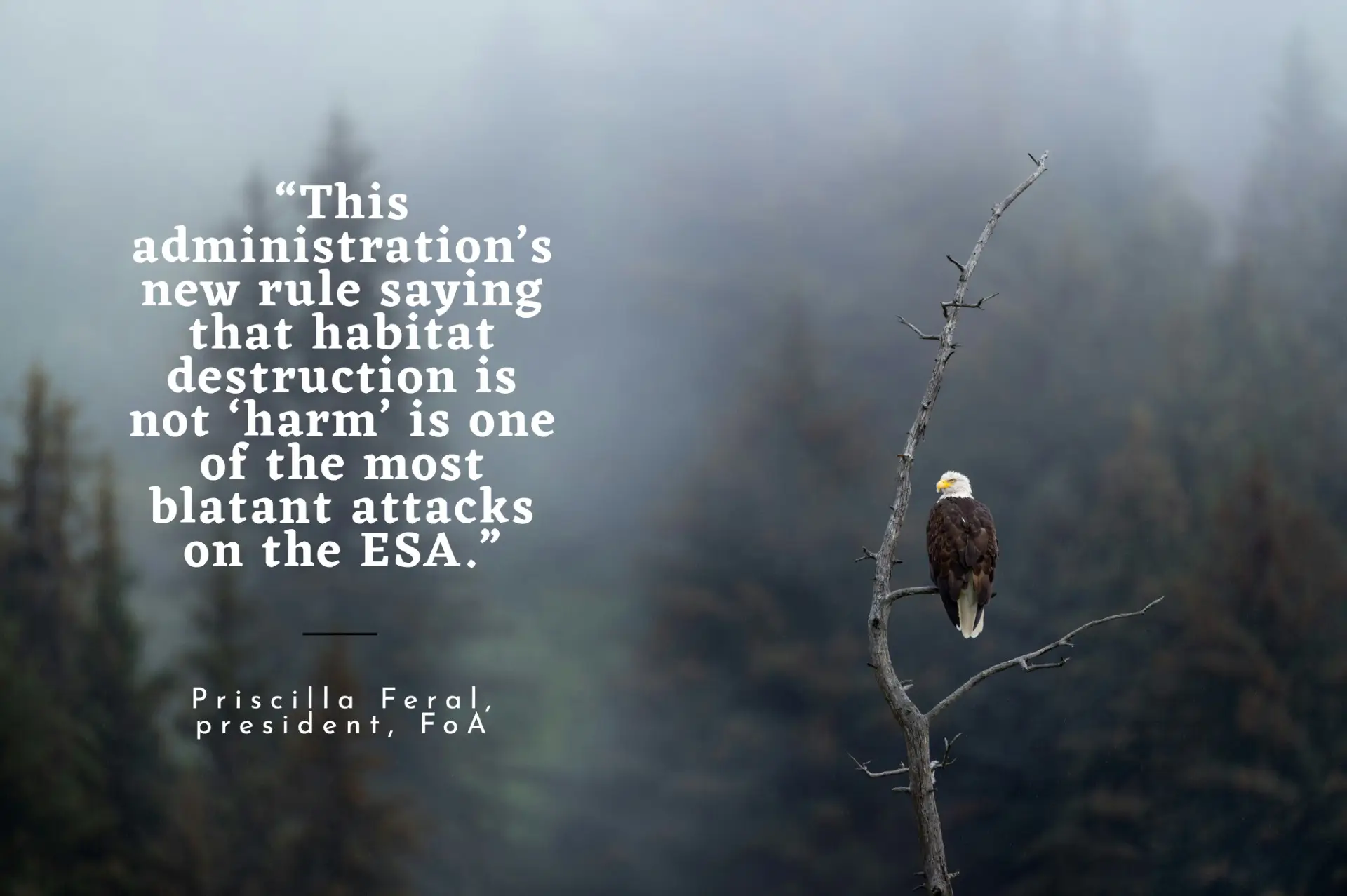
“This administration’s new rule saying that habitat destruction is not ‘harm’ is one of the most blatant attacks on the ESA,” said Priscilla Feral, president of Friends of Animals . “Habitat destruction was a key reason Congress passed the ESA and it remains one of the leading drivers behind the current extinction crisis. Congress needs to stand up and be abundantly clear that these attacks to the ESA will not stand.”
The ESA has prevented extinction for over 99% of the species it protects. By defending endangered animals from toxic chemicals and habitat destruction, the law has helped iconic animals like the bald eagle, American alligator, and brown pelican recover and leave the endangered list.
“Congress enacted the Endangered Species Act to prevent extinction—not to document it after the damage has already been done,” said Fitzpatrick. “For more than 50 years, our nation’s protections have reflected a basic legal, scientific, and commonsense truth: when habitat destruction actually kills or injures protected wildlife, that destruction is harm. The Administration’s rule would erase that longstanding safeguard through regulatory action and leave vulnerable species exposed at the precise moment the law is intended to protect them.
“As Co-Chair of the Congressional Animal Protection Caucus, I am leading this bipartisan effort to stop that rollback and draw a clear line: no Administration—Republican or Democratic—should be permitted to hollow out a landmark law enacted by Congress.”
“I’m proud to join Congressman Fitzpatrick in leading the bipartisan Safeguarding Endangered Species Act. This essential legislation will reverse the Trump administration’s recent rule eliminating habitat protections outlined in the 1975 Endangered Species Act,” said Quigley. “As Co-Chair of the Congressional Animal Protection Caucus, I’m honored to continue fighting for our wildlife and the endangered species around us.”