

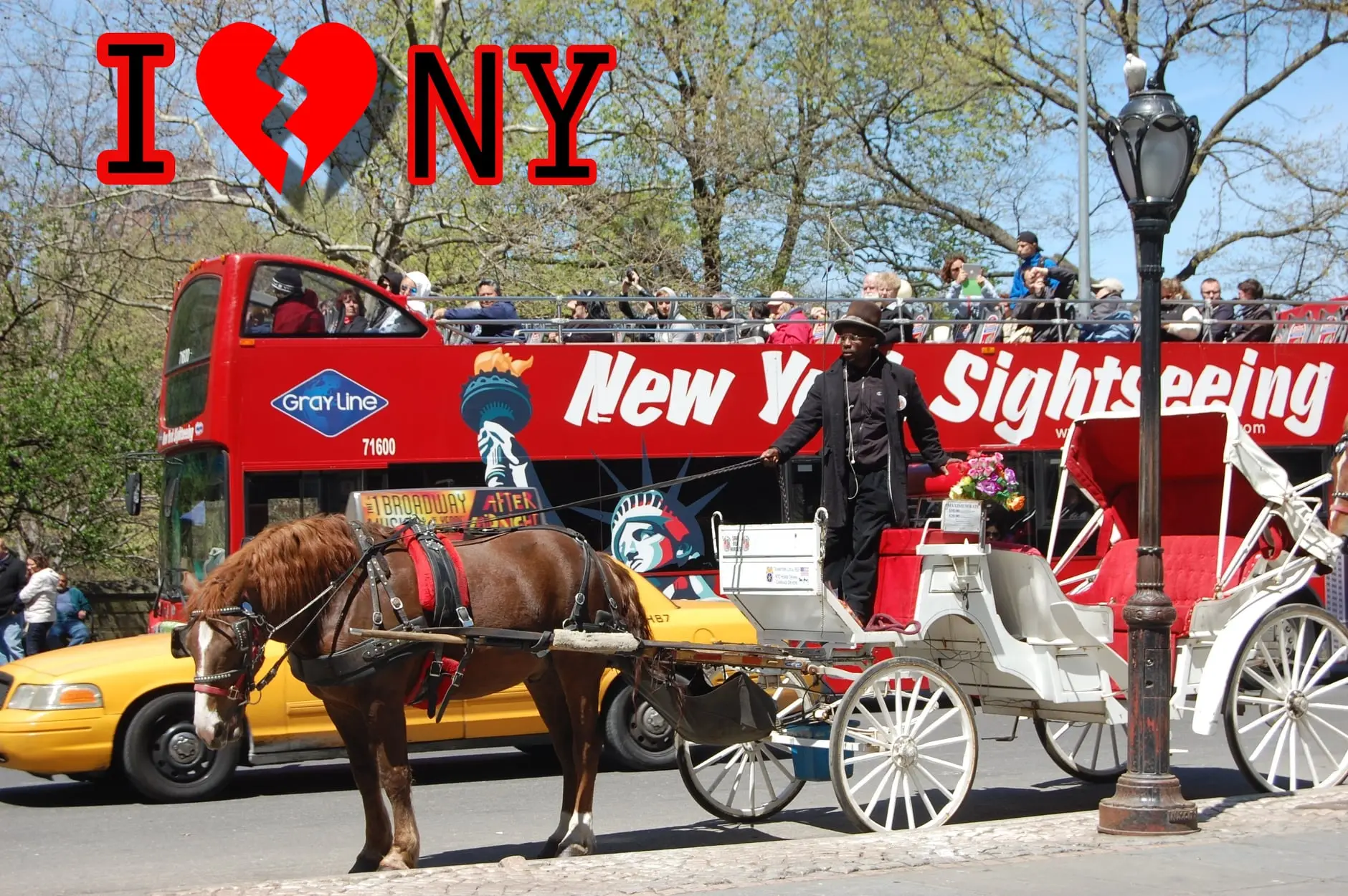
Whether or not the N.Y.C. carriage horse driver was cleared of animal cruelty after the horse Ryder’s death or not, the crime is that the industry still exists at all.
That’s why Friends of Animals has consistently pressed for one thing—a carriage horse ban.
The only equitable, sensible and humane solution is to shut down the industry; save the horses and take them to sanctuaries; and for the city and carriage drivers to come to an agreement about the creation of new jobs.
You cannot regulate atrocities as some other horse advocates would like you to believe.
For instance in 2016, a bad bill was introduced that called for relocating the horses permanently to Central Park and building stables. As our board member Elizabeth Forel, founder of The Coalition to Ban Horse-Drawn Carriages, pointed out, if such a bill had passed, it could have entrenched the trade for generations to come. Not to mention, these other groups have no understanding of the requirements such a project would take. Central Park is landmarked—both the park and the beautiful historic buildings. They have no understanding of the special needs for horses, horse carriages, storage facilities, showering facilities, properly sized stalls, etc. etc. etc.
But fortunately for those of us who opposed it, the owners pulled out of the deal at the last minute because the bill would have reduced the number of horses and their income. In other words, the bill fell apart.
Then in 2018, Mayor de Blasio’s administration restricted the carriages from picking up passengers outside of the park. And more recently, the City Council passed a bill to prevent carriage horses from working on hot or humid days.
Those regulations meant nothing to Ryder, who on a hot August day in 2022, collapsed in Midtown Manhattan after a seven-hour workday pulling a carriage through Central Park.
They meant nothing to Aisha, who in March 2020 had to be euthanized after a disturbing video showed her collapsing in Central Park. Including Aisha, three carriage horses had died by March of 2020, according the New York Times, two of them euthanized after contracting colic, a gastrointestinal condition, which can range from an impaction to a twist in the colon or small intestine.
We are disgusted by disingenuous ploys to let people think that regulations are making a big difference to the horses. They are not.
The horses still travel to and from their stables on the busy streets of New York City where most of the accidents occur. The drivers will still make illegal U-turns to access the hack lines and still ignore existing regulations such as leaving their horses unattended because humane law enforcement is nonexistent.
Horses will still be robbed of daily turnout, which is necessary for their health and happiness. Various studies link pasture time to stronger bones, better respiratory health, reduced colic risk and lower stress levels. Turnout gives horses a chance to fill their need for social contact with other horses—such as mutually grooming each other’s backs.
True, driver Ian McCeever was found not guilty, but let’s face it, N.Y.C is the one guilty of animal cruelty as long as the industry is allowed to be there.
Ryder’s Law, which was introduced by Council Member Bob Holden in 2022, would replace the industry with horseless electric carriages, like in Guadalajara, Mexico.
“This decision ignores the cruelty and inhumanity of what happened,” Holden commented on the verdict. “I will not give up on ending this barbaric and outdated industry once and for all.”
And FoA won’t either. We’re hopeful with a new mayor and some like-minded new Council Members, NYC carriage horses can get the freedom they deserve.