

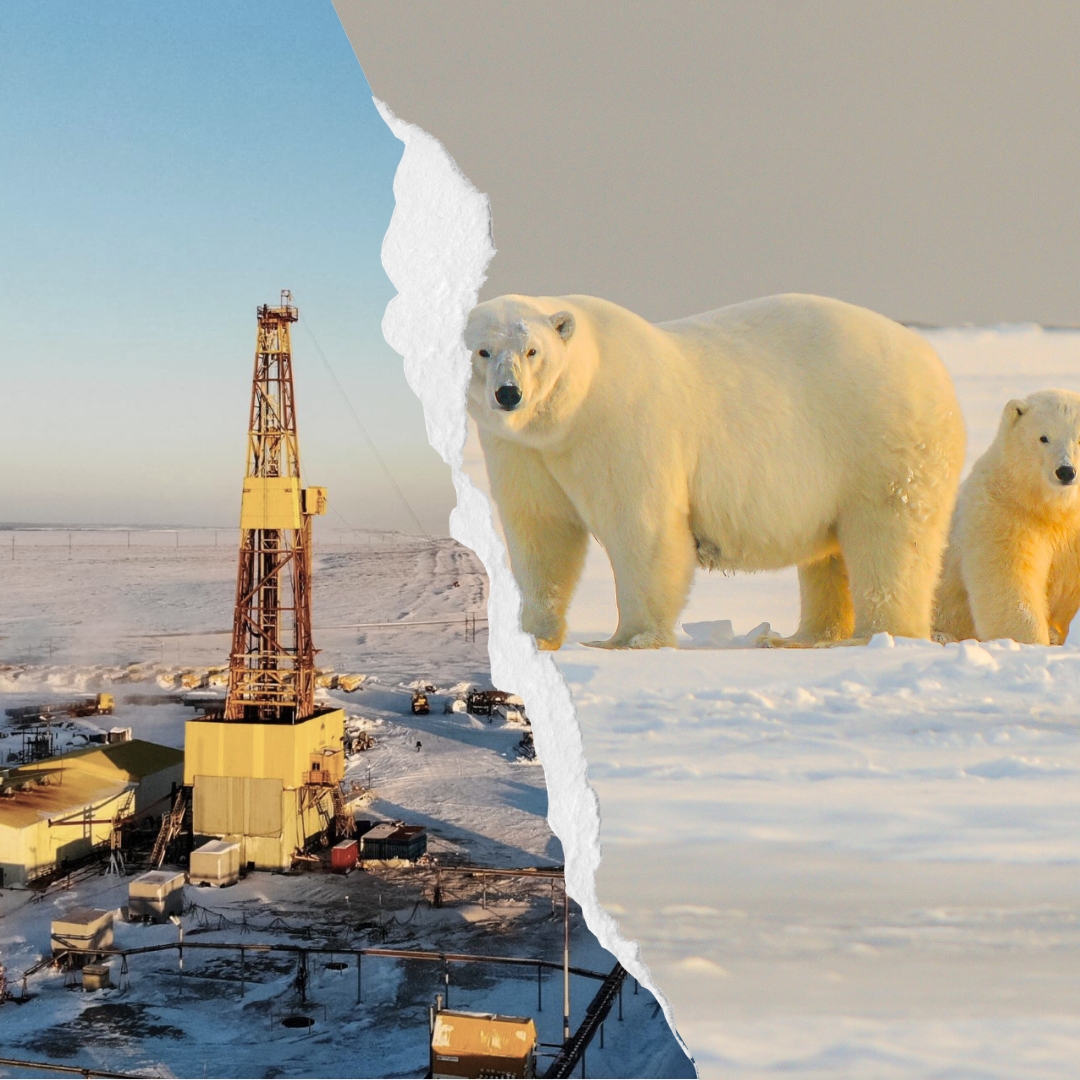
In the Arctic winter, female polar bears hunt constantly to build up the fat reserves necessary to survive and raise cubs. Once that happens, the search begins for a suitable place to build a den. The warming climate has made it difficult to find quality places to den on the ice, so polar bears have increasingly been denning on land.
Mom must make sure the snow is deep enough to dig a bear-sized hole, yet stable enough that it will not cave in on top of her. Now a new proposal from U.S. Fish and Wildlife Service, which caters to Big Oil, could result in heavy equipment used in seismic exploration and drilling activities crushing polar bears in their dens or scaring them out too early, leaving cubs to die of exposure or abandonment by their mothers.
The agency received a request from Alaska Oil and Gas Association to authorize “incidental” killing of polar bears from the Southern Beaufort Sea population and Pacific walruses associated with year-round oil and gas industry activities in the Beaufort Sea and adjacent Northern coast of Alaska. Adding insult to injury, these callous operators think it’s perfectly reasonable to extend this for five years—allowing not only continued harassment, but even the killing of polar bears, something that was previously prohibited.
The deadly proposal is now available for public review and comment. To join us in submitting a comment opposing the proposal visit www.regulations.gov and search for docket number: FWS–R7–ES–2026 –0694. Click on the blue tab that says “open for comments” and then the one that says “comments.” Comments are due by April 8, 2026.
Why stopping this matters
• Polar bears (Ursus maritimus), including the Southern Beaufort Sea population (SBS) were listed as threatened under the Endangered Species Act in 2008, and the SBS population is considered the most vulnerable polar bear population in the world.
• Rapid sea-ice loss has driven a severe decline in the SBS polar bear population. Between 1986 and 2010, SBS polar bears declined by an estimated 50%, from approximately 1,800 individuals to just 907 individuals. Research in 2020 maintains this population estimate.
• Even seemingly modest reductions in cub survival rates can have profound implications for polar bear populations, particularly given their low reproductive rates and the current environmental challenges they face. Females typically give birth to one to three cubs every two to three years. This slow reproductive cycle means that any decrease in cub survival can significantly harm population growth and recovery.
• The noise generated by routine oil operations can disturb essential polar bear behavior and increase stress on these animals’ when food may be scarce. It can also trigger mass walrus stampedes, a known risk resulting in animals being crushed to death. The International Union for the Conservation of Nature Red List classifies walruses as vulnerable to extinction.
• Increases in monitoring and mitigation measures to reduce den disturbances will remain insufficient in preventing the harassment and killing of SBS polar bears, as den locations are more likely to continue to change in response to habitat loss and prey scarcity. Specifically, one of the most relied-on surveying tactics utilized for identifying dens, aerial forward-looking infrared (FLIR) surveying, is far from accurate. Research conducted in 2020 found that only 55% of identified dens were detected using FLIR surveys.
Thank you for your help! These comments help shape policy, defend against rollbacks of environmental protections, and ensure that the voices of wild animals are considered in decisions about land use, permits, and federal funding.