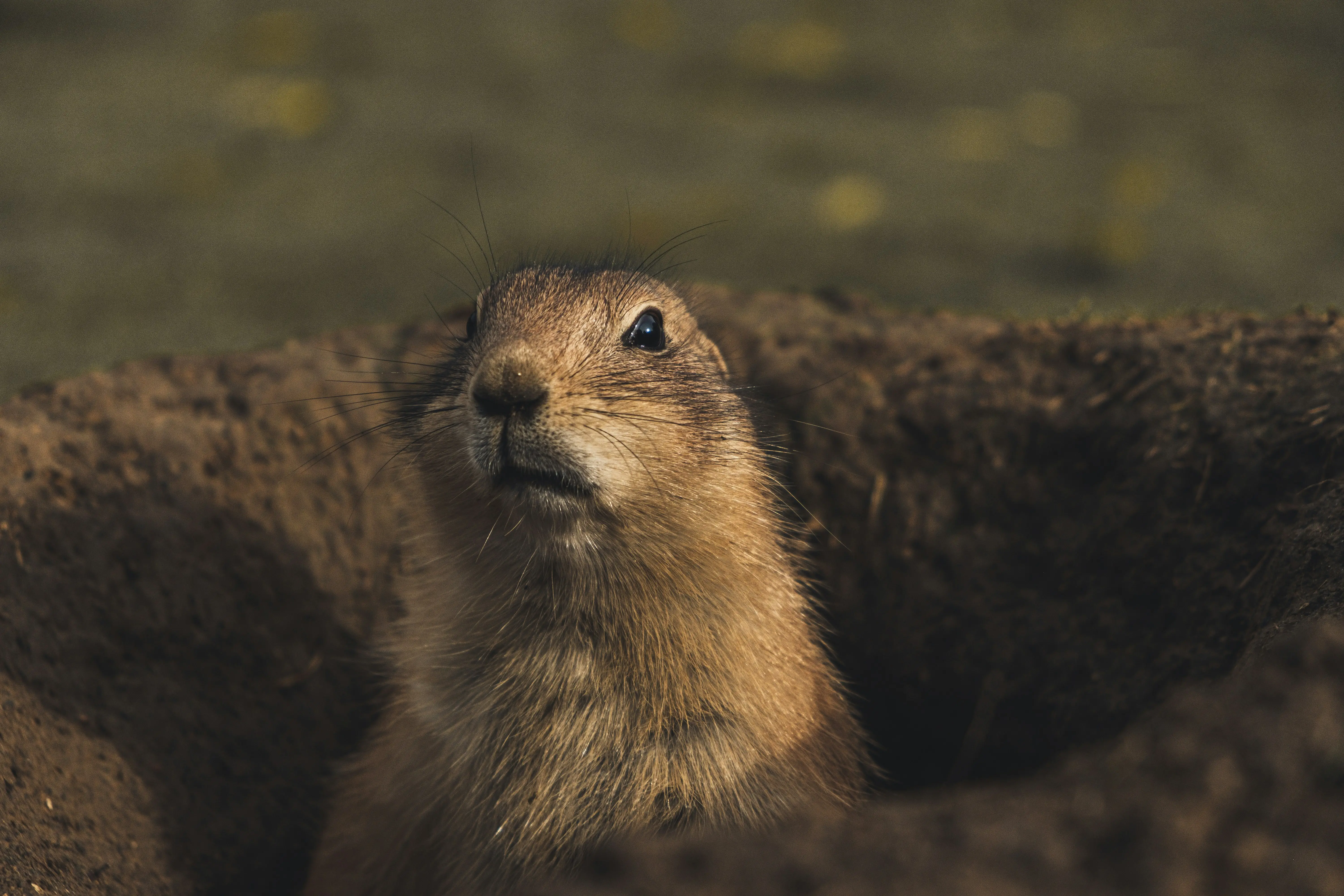

We are hitting the ground running in 2026! We’ll be in court this month defending Utah’s prairie dogs.
Our case is challenging permits and a range-wide plan that allow the removal and killing of thousands of threatened Utah prairie dogs and imperils the species to appease a relentless local drive for development.
“We’re not about to give the U.S. Fish and Wildlife Service a green light to drive these animals to extinction,” said Friends of Animals President Priscilla Feral. “Most moves federal wildlife managers in this Administration make derail protections for threatened wildlife such as prairie dogs. They neglect to see the moral and scientific value of seeing these social, intelligent animals as a benefit to western grassland ecosystems, or worthy of our affection and protection.”
Prairie dogs were declared an endangered species in 1973 after their population dropped to a few thousand. In 1984, FWS downgraded the species’ ESA status to threatened after the Utah Division of Wildlife Resources (UDWR) unsuccessfully petitioned FWS to delist Utah prairie dogs. FoA’s lawsuit alleges that FWS’s plan violates the Endangered Species Act and the National Environmental Policy Act by failing to ensure the species’ survival and recovery and by not mitigating harm to the maximum extent practicable.
More than 7,000 prairie dogs could be removed or killed over a 10-year period under the new U.S. Fish and Wildlife plan, plus an additional 15,000 independent of development, totaling more than a quarter of the entire population. Up to 1,750 acres of their habitat could be permanently destroyed as well.
The FWS’s plan fails to consider the impact that the killing or relocating will have on the connectivity of the prairie dog habitat and there is no indication there is even sufficient and suitable land to translocate the prairie dogs, FoA said in our lawsuit. Even if moved, 90 percent of prairie dogs will not survive past their first year in the new location and two-thirds of new sites fail completely.
WHY THIS CASE MATTERS
Prairie dogs, which are found only in North America and are social animals, play a significant role in the biological diversity of ecosystems. Four species (the black-tailed, white-tailed, Utah, and Gunnison’s) are found ranging from North Dakota to northern Mexico, with a fifth species (the Mexican) in central Mexico.
All prairie dogs are keystone species, and that means that it has a profound impact on its grassland ecosystem. Prairie dogs serve as prey for terrestrial predators such as American badgers, black-footed ferrets, bobcats, coyotes and long-tailed weasels, and for avian predators such as ferruginous hawks, golden eagles, northern goshawks, prairie falcons and Swainson’s hawks. Their burrows provide homes for a diverse array of animals, such as black-footed ferrets, burrowing owls, bull snakes, tiger salamanders and hundreds of species of insects and spiders.
The burrows also improve cycling of water and other nutrients. The subsoil exposed by excavations at colony-sites promotes the growth of certain plants, such as the aptly-named prairie dog weed, that do not commonly grow elsewhere. And plants at colony-sites commonly have more nutrition than the same plants away from colony-sites, so that American bison and pronghorn antelope prefer to feed at colony-sites.
It’s maddening that humans have continually pushed into their ecosystem, targeting their population for extinction through poison, shooting and habitat destruction.
“Any progress that has been made to save Utah prairie dogs after decades of poisoning and other indiscriminate killing is lost with this range-wide plan, which contains no real measures to protect these intelligent and valuable animals,’’ said Jennifer Best, director of Friends of Animals’ Wildlife Law Program. “We will be in court fighting to have science and the inherent value of animals considered by the federal government before it authorizes the plundering and killing of threatened and endangered species.”
FoA heads to court to protect Utah prairie dogs from eradication
Published in News on January 7, 2026