

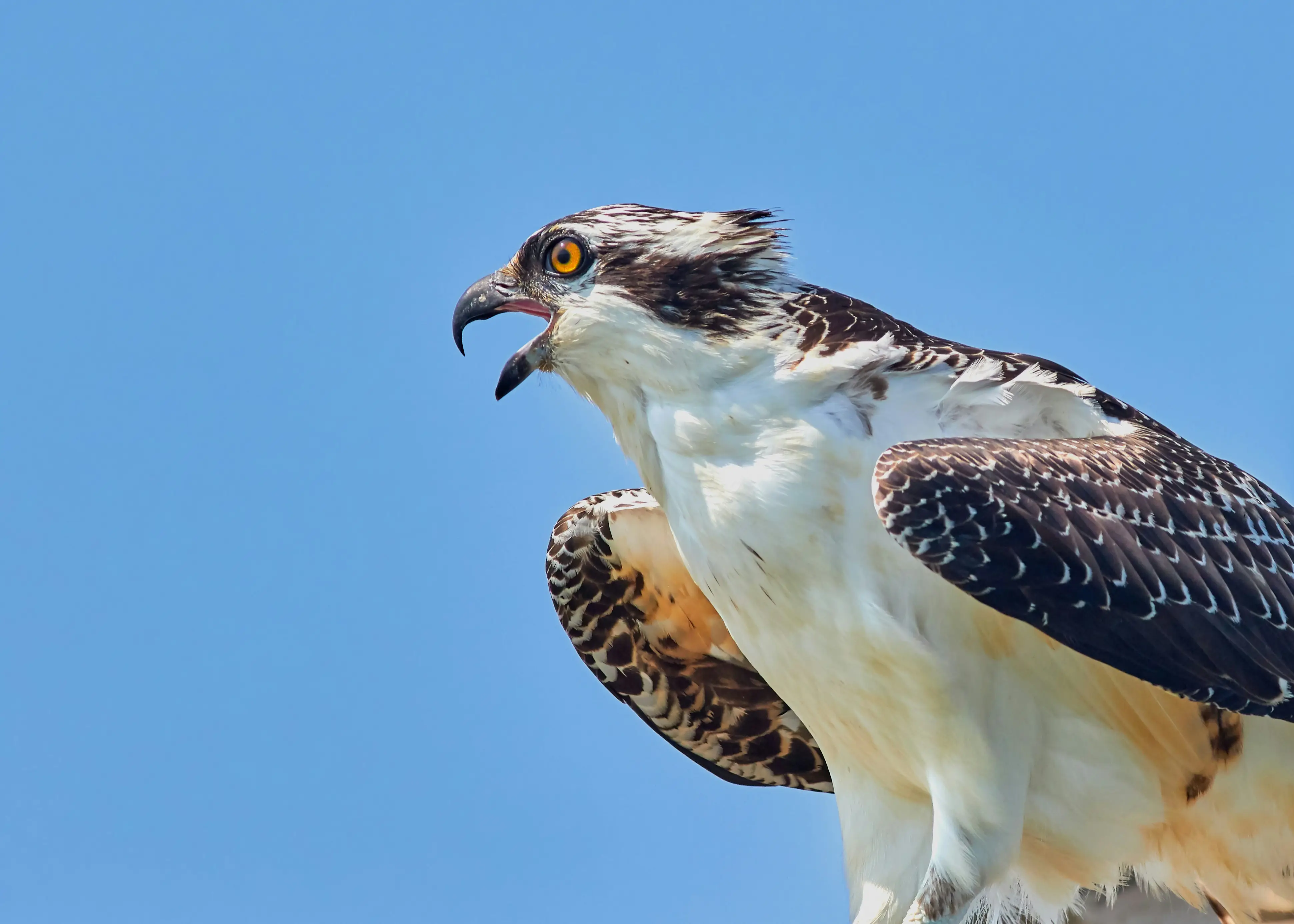
This week, the Connecticut Audubon Society took to social media to let us know: ospreys are sending a warning message.
Ospreys, who were once on the brink of extinction—in 1974, Connecticut was only home to nine active osprey nests, an all-time low—have rebounded since the banning of the insidious insecticide, DDT. They’re hailed as a conservation success story as public education aided in their fight back from the brink.
But, as Friends of Animals knows all too well, we can’t let our guard down; that new threats, especially in an era of ecological pillaging, constantly arise.
According to the Connecticut Audubon Society, who tracks and stewards osprey nests throughout the state, the early numbers from this year are concerning.
They reported that by August 1, 2026, about 1 in 4 monitored Osprey nests had failed, compared with about 1 in 6 during the same period in 2025; and that Great Island—located in FoA’s backyard of Darien, CT—which was once known as an osprey stronghold, only five chicks have fledged so far this year.
The numbers are in accordance with a recent trend FoA has monitored: ospreys are in decline.
Last fall, at the time of CT Audubon’s annual State of the Birds 2025 report, we wrote about a noticeable drop in osprey populations.
In 2024, Connecticut was home to over 900 active nests, and that fell to around 800 nests in 2025 with a considerable decline in fledglings as well. And with the signs pointing towards 2026’s figures appearing to show an even further decline, we’re sounding the alarm.
The culprit of these stark declines is clearly fishing. Ospreys largely rely on menhaden, a small, oily, nutrient-dense fish that was once widely available. But they’re fished, extensively, before being reduced to fish oil and fish meal and for use as bait.
Dr. Watts of the Center for Conservation Biology at the College of William and Mary and colleagues published a study researching osprey nests in Chesapeake Bay. They found that Menhaden delivery to nests has dropped by 80% since the 1980s, and that Menhaden dropped from just below 70% of the Osprey’s diet to below 30%. According to Dr. Watts, this shift from menhaden has caused a 50% reduction in overall diet quality. This decline is not sustainable.
The bit of hope we can leave you with is that the Atlantic States Marine Fisheries Commission agreed, following testimony from conservationists all along the east coast, on a new proposal to reduce the Chesapeke Bay menhaden fishery cap.
We’ll be submitting comments to the Commission, telling them to forget about a new cap; we’d rather see the whole thing called off. Menhaden should never be taken from our waters, chopped up and reduced to a supplement. The ospreys rely on them too much.
You don’t need to compete with ospreys and rely on fish oil for your omega-3’s either. There are plenty of vegan, algal oil supplements on the market (algal oil is how fish get their omega-3’s), and we’ll highlight a few of our favorite choices at the end here!
The proposal is still yet to open up to public comment. When it does, we will be the first to let you know.
Sign up to receive emails from us here, and look out for our email alert.
Future Kind offers a reliable Omega-3 from a vegan-focused brand that uses eco-friendly packaging
Nordic Naturals Algae Omega is a premium choice which prioritizes sustaibale, high-quality sourced materials
Nextdia Omega-3 comes in a turmeric-flavored gummy, offering a great choice for those who prefer a tasty way to get their omega-3s
Nutriva Algal DHA is a potent choice, providing 500mg of DHA per serving.
PureEarth Veggie Omega-3 is a great option for those who aren’t ready to break the bank; it’s also non-GMO and gluten-free, making it a great option for those with dietary restrictions, as well