

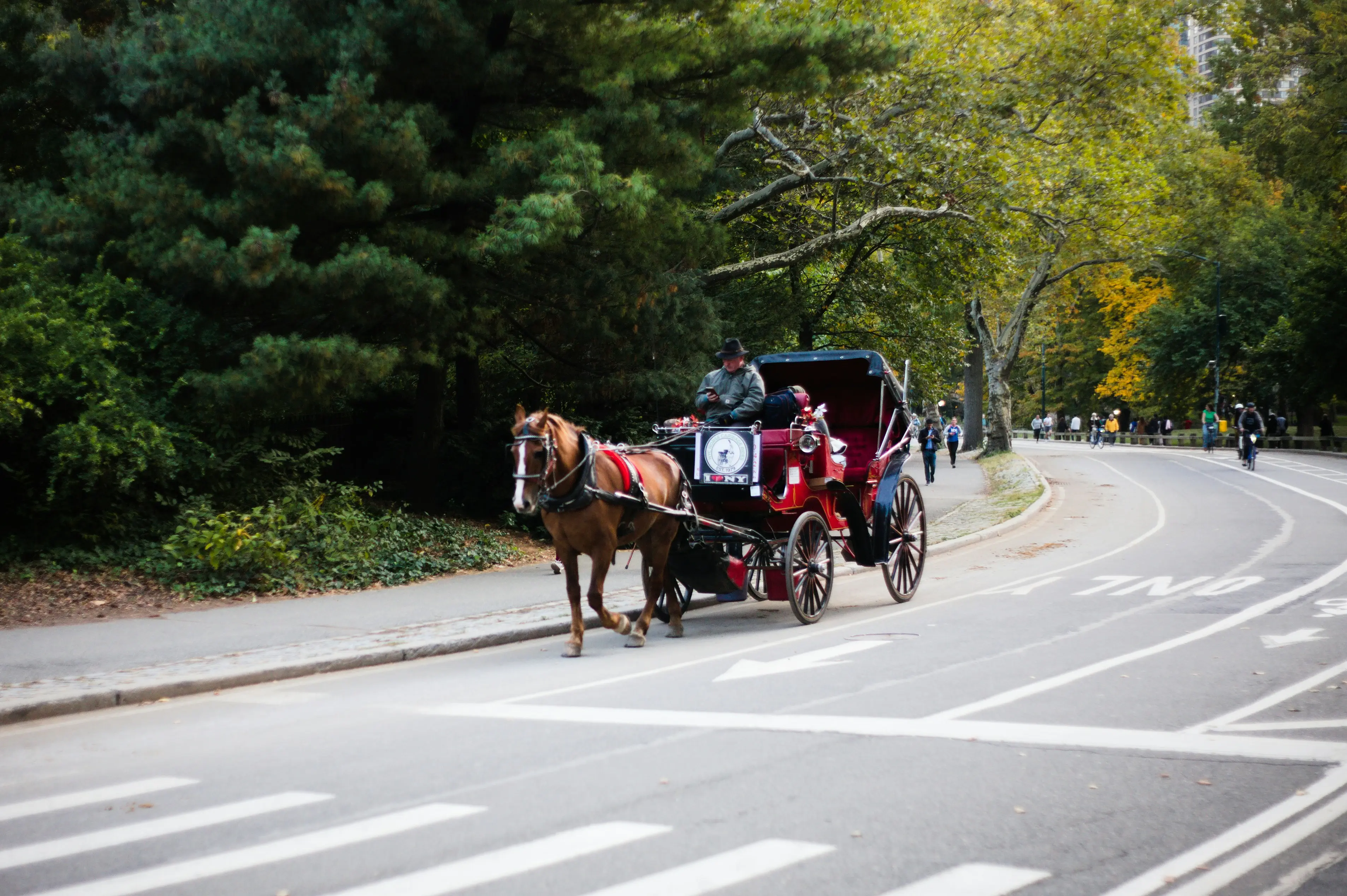
On Labor Day, a spooked carriage horse named Bambi took off galloping through NYC’s Central Park—her driver was flung across the road and her passengers were forced to jump to safety. Luckily Bambi and the humans involved were not injured.
TWU Local 100 Shop Steward Christina Hansen is blaming the incident on Bambi’s lack of training, an unusually loud garbage truck driving too close to the carriage and even the Central Park Conservancy, which recently said it supports a ban of carriage horses in NYC following the collapse and death of a carriage horse named Lady in August.
“With the Conservancy saying they don’t want us, it has created a hostile and potentially dangerous situation,” Hansen told PIX 11.
Well Ms. Hansen, truer words have never been spoken.
The situation for NYC carriage horses is hostile and dangerous to horses. It always has been and always will be.
You can’t train a carriage horse not to be a prey animal with a well-developed fight or flight response. Horses evolved from small mammals whose survival depended on their ability to flee from predators like wolves and big cats. Their instinctual response to perceived threats—such as a super loud garbage truck or perhaps a double-decker sighting-seeing bus that gets close—is to flee because that’s their preferred survival mechanism.
With its nose to tail-pipe existence, the carriage horse industry will never recognize who horses are—they will always be a means of entertainment and profit. That’s why the only equitable, sensible and humane solution is to shut down the industry; save the horses and take them to sanctuaries; and for the city and carriage drivers to come to an agreement about the creation of new jobs.
New regulations implemented in the last seven years—carriages cannot pick up passengers outside of the park and carriage horses are not allowed to work on particularly hot or humid days—are making no difference.
In addition to their instinct to flee from danger, horses are also robbed of daily turnout, which is necessary for their health and happiness. Various studies link pasture time to stronger bones, better respiratory health, reduced colic risk and lower stress levels. Turnout gives horses a chance to fill their need for social contact with other horses—such as mutually grooming each other’s backs.
A fight to end the exploitive carriage horse trade has been playing out in major cities across the country.
While we wish the phase-out would be quicker, we’re applauding San Antonio City Council members for approving a plan to phase out horse-drawn carriages from city streets by 2030. Currently, five companies have permits to operate five carriages each on downtown streets within two miles of City Hall.
N.Y.C is guilty of indifference to horse abuse as long as the industry is allowed to be there.
Ryder’s Law, which was introduced by Council Member Bob Holden in 2022, would replace the industry with horseless electric carriages, like in Guadalajara, Mexico.
We’re hopeful with a new mayor and some like-minded new Council Members, NYC carriage horses can get the freedom they deserve.