

Apparently, when a scientist worries about human health and the environment, they’re fired from the newfangled Environmental Protection Agency under the Trump administration, says Priscilla Feral, president of Friends of Animals.
It’s yet another reason Friends of Animals is continuing its efforts to sink Ocean Era’s fish factory farm project, not only because it will degrade the marine environment, but we can’t allow the federal government to cover up agency expertise and science.
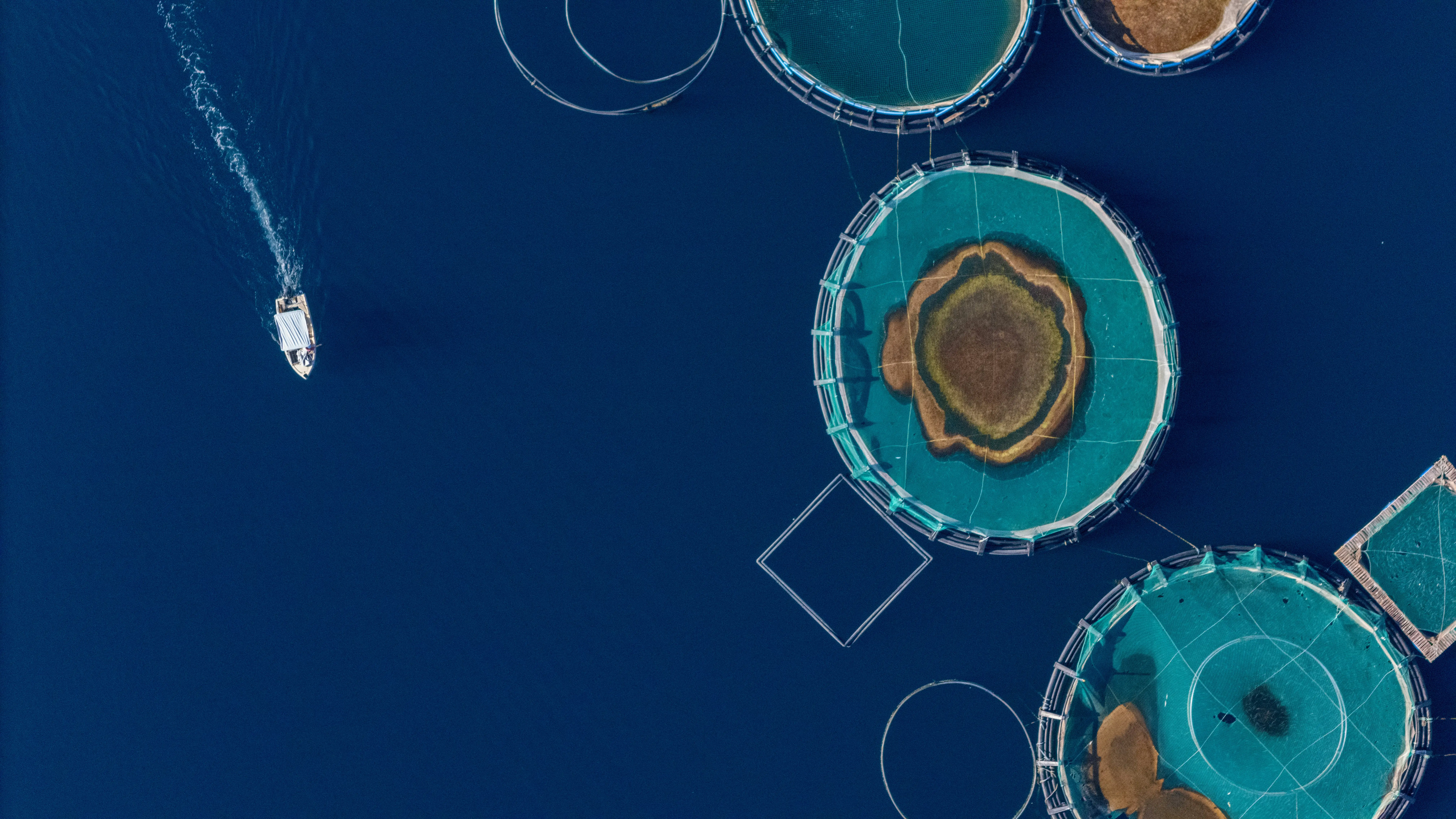
Since 2019, Ocean Era, Inc., has been relentlessly trying to begin operation of the Velella Epsilon Project—the first open-ocean aquaculture facility of its kind in federal waters off the Gulf of Mexico.
And FoA has persisted in stopping it because the facility would be in one of the most sensitive and damaged areas of federal waters, where harmful algal blooms routinely kill fish, eels, dolphins and sea turtles and represent a threat to human health.
FoA’s latest legal challenge is against the Final modified permit issued in July by the Environmental Protection Agency (EPA). Ocean Era originally proposed to use a net pen constructed of copper material and EPA required monitoring of copper surrounding the facility to determine if it would leach and cause unreasonable degradation. However, when Ocean Era switched to a plastic material, it did not require Ocean Era to monitor the farm for microplastics, the tiny particles that have become a rising environmental and health concern.
FoA initially challenged EPA’s modified permit through EPA’s Environmental Appeals Board, which found that EPA did not exercise considered judgment regarding microplastics. Nevertheless, when the decision was sent back to the EPA it issued a final permit that still did not require microplastic monitoring. Friends of Animals amended its petition in the D.C. Circuit Court of Appeals to challenge this final modified permit.
Friends of Animals is not the only one concerned about the threats of microplastics—before the Environmental Appeals Board we had cited a memo written by EPA official Kip Tyler, who was fired after writing the memo.
Tyler was a senior permitting specialist and environmental engineer working on the permit. The project’s planned use of plastic mesh pens drew his attention because he had become aware of research on the negative impacts of microplastics in the ocean, so he sought to require Ocean Era to monitor for microplastics coming off the nets.
According to a July 10 article in the New York Times, some top E.P.A. officials said that mandating any company to track microplastics could set a cumbersome precedent for other industries, so the agency ordered the requirement struck from an earlier draft of the permit. After Tyler filed the memo laying out his objections to that, the agency fired him.
“It would be highly inappropriate for agencies to suppress any scientific gathering data in order to protect industries from regulation,” Richard W. Painter, a professor of law at the University of Minnesota Law School who served as President George W. Bush’s chief ethics lawyer from 2005 to 2007, told the New York Times. If Mr. Tyler’s claims held true, he said, it would be “a very troubling development, not just in terms of the politicization of science, which is very dangerous, but also for the protection of the civil service.”
We couldn’t agree more.
——-
Why this matters more than ever
- Marine pollution reached over 17 million tons in 2021 and is projected to increase as much as triple by 2040.
- The Gulf of Mexico is prone to red tide and harmful algal blooms that turn coastal waters red, kill marine animals in massive numbers, and sicken people. These toxic outbreaks feed on the very kind of nutrient pollution that fish farms release.
- The proposed farm site is home to many threatened and endangered marine species, including five species of sea turtles, Rice’s whales, sperm whales, giant manta rays, and oceanic whitetip sharks.
- Nearly half of the species in this region—48%—are already moderately or highly vulnerable to climate change. As ocean temperatures rise, these animals struggle to survive: their ability to reproduce, grow, and thrive is being pushed to the brink.