

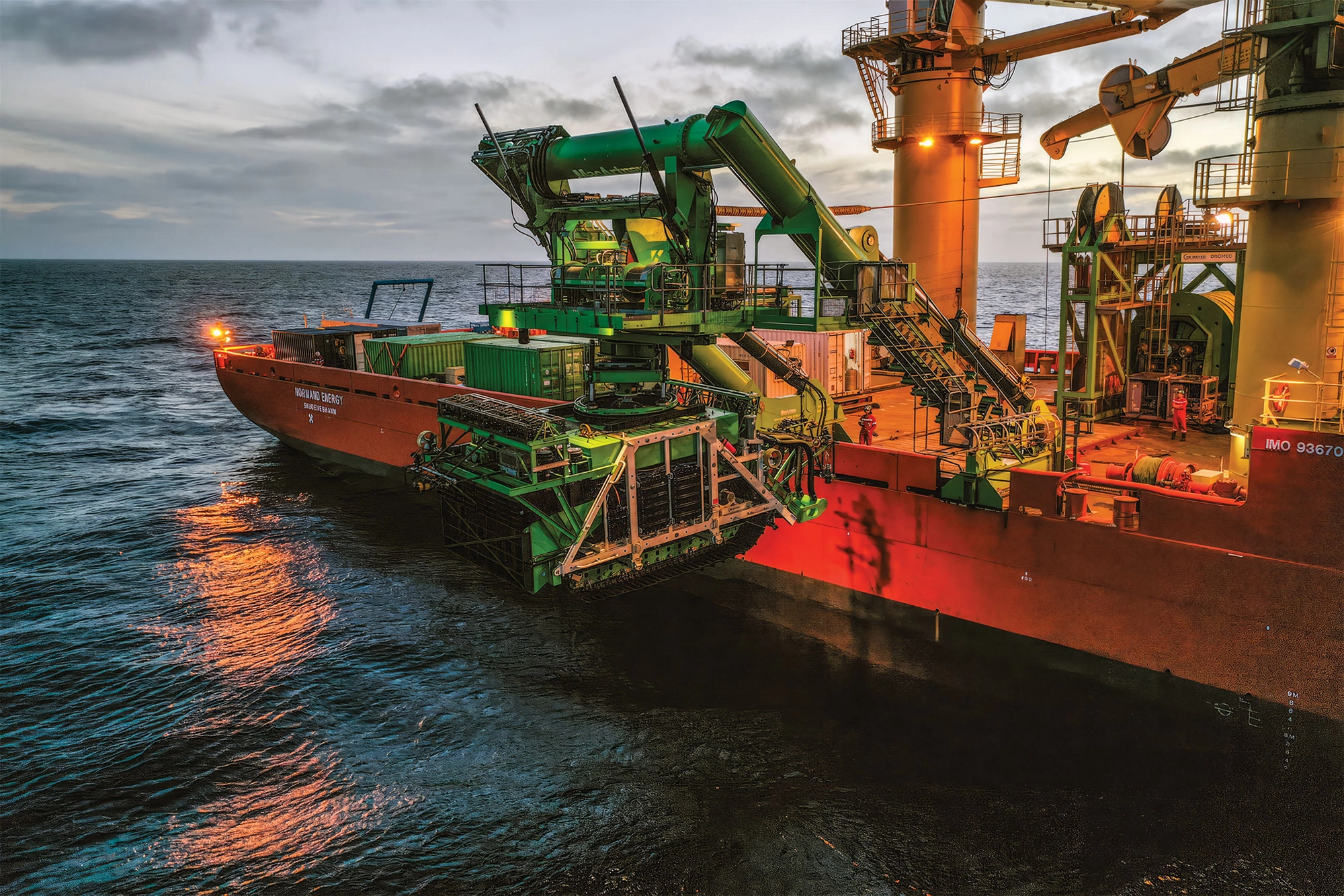
Image credit: Global Sea Mineral Resources
Thousands of feet beneath the Pacific Ocean, sea cucumbers drift along the abyssal floor playing a critical role in aerating sediment and recycling nutrients. Nutrients from the deep ocean are carried to surface waters and feed phytoplankton, which absorb more than one-third of global carbon emissions annually. And whales, dolphins, and other marine mammals utilize the depths in ways we’re only beginning to understand.
Now, these fragile ecosystems are being targeted for industrial mining. Last April, the Trump Administration opened the door to deep seabed mining (DSM) after lobbying from The Metals Company, a Canadian company with a U.S. subsidiary (TMC USA), which has since applied for permits to mine in an area between Mexico and Hawaii known as the Clarion Clipperton Zone (CCZ).
You can submit written comments objecting the two TMC USA applications by following the instructions here. The federal register is accepting comments until Feb. 23.
Many other countries, including France, Costa Rica, Germany, and New Zealand, have opposed deep-seabed mining and called for a moratorium or strict precautionary measures. If the U.S. issues permits to TMC USA, the international seabed would be open to dangerous activity and set precedent for further destruction down the road.
What is deep seabed mining?
DSM is the drilling and extraction of the deep seabed, an area that’s remote despite encompassing roughly two-thirds of the Earth’s surface.
The deep sea, particularly the CCZ, is home to an incredible array of species—185 new species have been discovered and named in the CCZ, the majority of which were found after the year 2000.
Large regions of the CCZ seafloor are covered with polymetallic nodules composed of valuable minerals such as cobalt, manganese, copper, and nickel; the same minerals TMC is trying to harvest. Meanwhile, 30-40% of species in the CCZ live on these polymetallic nodules, including the sea cucumber and the primoid coral, making them incredibly vulnerable to harm from mining.
The nodules also form very slowly over millions of years, meaning DSM will permanently remove these species’ habitats.
Excavating minerals from the seabed entails crushing seafloor organisms, destroying habitat, producing massive sediment plumes, and introducing noise and light pollution to an otherwise untouched area. This would have far-reaching, devastating for already-imperiled dolphins and whales.