

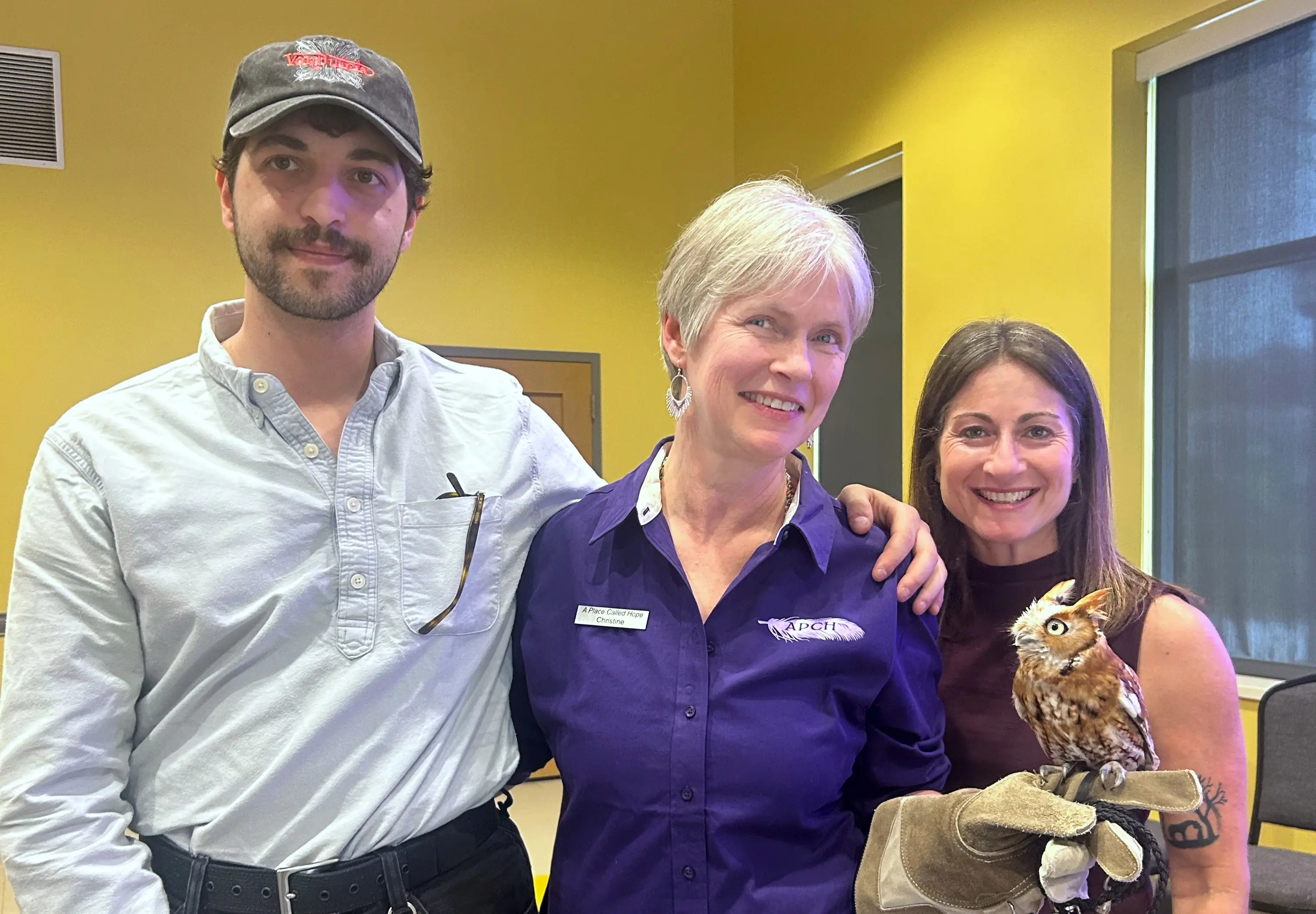
Newtown, Connecticut, made history April 20 when the Board of Selectman unanimously voted on a policy to ban first- and second-generation anticoagulant rodenticides on municipal properties. This includes municipal buildings leased out to other entities, such as NewSylum Brewery and Parent Connection.
Anticoagulants work by preventing blood from clotting. So, hawks, owls, eagles, foxes, and other animals are dying a slow agonizing death from internal bleeding after consuming poisoned rodents who’ve taken the bait from those ubiquitous black boxes outside buildings. It makes no sense to be killing animals who naturally regulate rodents.
Before the official vote, several people spoke up in favor of the policy.
“Friends of Animals believe raptors, foxes and other animals dying slow, agonizing deaths simply from eating a meal is the definition of animal cruelty, so thank you to Newtown Conservation Commissioners Holly Kocet and Lisa Shirk for their unwavering efforts to stop this cruelty,” said Nicole Rivard, government relations manager for Friends of Animals. “And to the Board of Selectman, thank you for being open to learning about effective non-toxic rodent solutions. If you vote yes, you will create a blueprint for other municipalities evaluating alternatives to poisons.”
Friends of Animals, A Place Called Hope Raptor Rehabilitation Center, and CT Votes for Animals brought our “Think Outside the Bait Box” presentation, which reveals the dangers of rodenticides to wildlife, pets, and children, to the Newtown Conservation Commission on Oct. 15.
Since then, FoA has been helping the Commissioners explore alternatives to second-generation anticoagulant rodenticides, such as rodent birth control, sanitation, and exclusion. We also connected them with municipalities in Massachusetts that have adopted some sort of public lands ban on SGARs.
The Commission voted to restrict the use of anticoagulant rodenticides on town-owned properties at their meeting on Jan. 27 and then the policy was forwarded to the Board of Selectman for approval.
FoA testified alongside the Commissioners at the Board of Selectman meeting in favor of the ban on April 6.
FoA will continue helping other municipalities ban anticoagulant rodenticides while advocating for a statewide ban, which will be reintroduced in the Legislature in 2027.
Last year Connecticut enacted a state law further restricting public access to second generation anticoagulants, but critically, it continues to permit their use by certified applicators. This exemption reinforces a dangerous misconception: that these substances are safe when applied by professionals.
They are not. There is no safe poison, and there is no safe way to apply one.
When speaking in favor of the policy, Laura King, director of community engagement for Catherine Violet Hubbard Animal Sanctuary in Newtown, pointed out that the sanctuary is home to nesting hawks and owls, and that they of course are not confined to their property.
“Raptors are known to hunt up to a mile from their nests, meaning that the birds nesting at CVH are very likely hunting across the municipal properties this ordinance would protect,” she said. “Imagine what it would mean to these birds to have a contiguous zone of safety. A landscape where no rodenticide-laced prey awaits them on their daily hunts.”
Before they voted on the policy, Selectman Paul Lundquist commended the Commissioners. “Thank you for being so thorough and bringing this issue to us,” he said. “You’ve done an awful lot of legwork. I feel like this is a good example of the public bringing an issue to its proper level of importance, and we were able to act on it in a simple, positive way.”