

Friends of Animals has filed a federal lawsuit challenging the National Marine Fisheries Service’s denial of its legal rulemaking petition to restrict the import, export, and exploitation of cetaceans—whales, dolphins, and porpoises—for public display and entertainment in the U.S.
“The Marine Mammal Protection Act was enacted to safeguard marine mammals from exploitation, not to enable their suffering under the guise of research or entertainment,” said Jennifer Best, director of FoA’s Wildlife Law Program. “Our petition calls on the National Marine Fisheries Service to close the loopholes that have allowed the captivity industry to persist and to restore the law’s original purpose: to protect cetaceans, not profit from them.”
Captivity robs these intelligent, social marine mammals of the dynamic, complex, and expansive habitat and relationships they experience in the wild. Cetaceans are often migratory, traveling 35 to 140 miles a day.
Enclosures for captive orcas, for example, are allowed to be only twice the average adult length of the species to comply with the Animal Welfare Act. So, for instance, if an orca was 24 feet long, the tank would only have to be a measly 48 feet long.
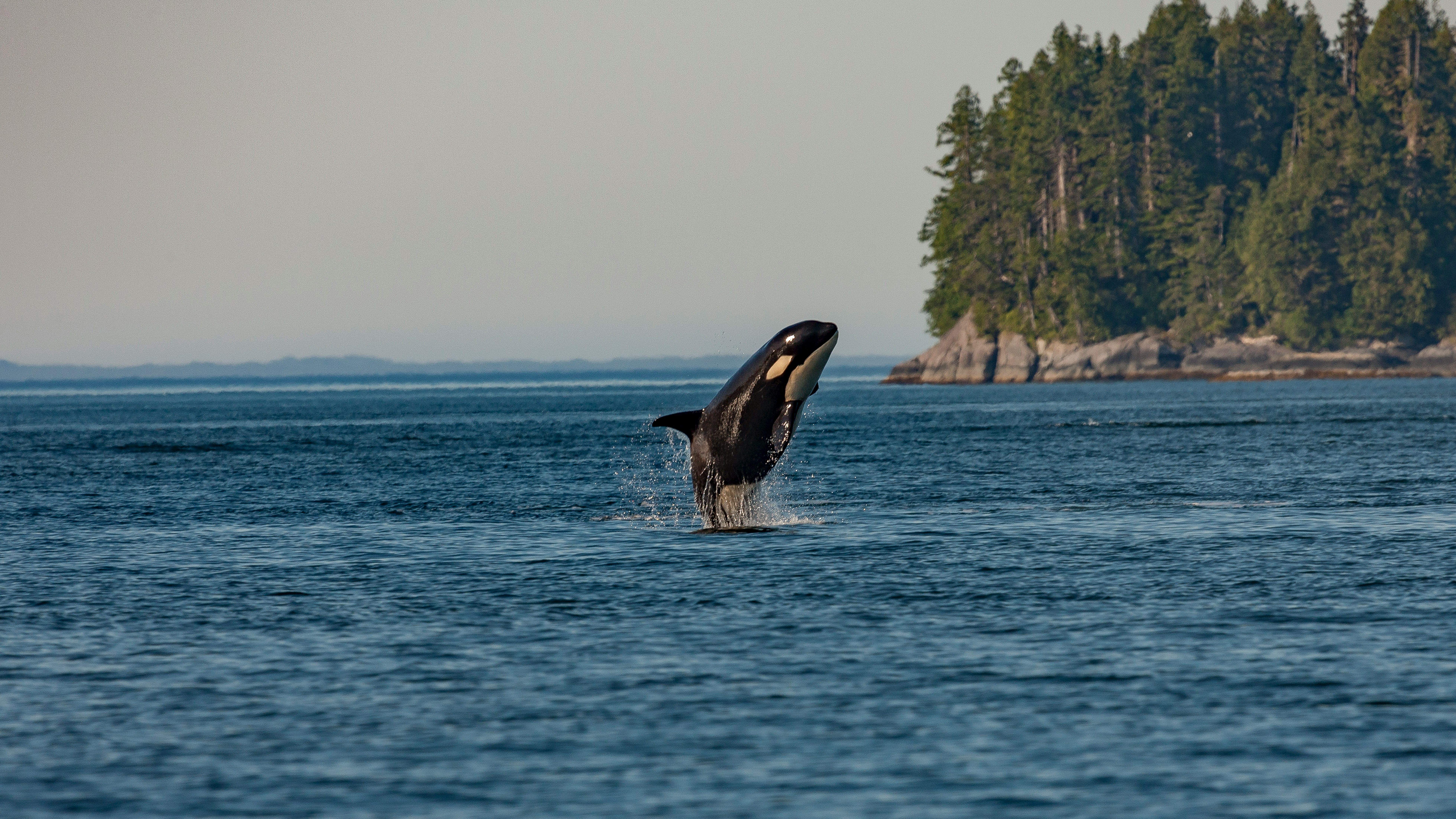
It’s mind blowing that an orca would have to swim the length of the standard enclosure approximately 110 times to travel 5,280 feet—the length of one mile. Orcas on average travel 40-75 miles a day in the wild, something they simply cannot do in captivity. An orca would have to swim back and forth the length of the enclosure 2,200 times a day to swim 40 miles and it could never swim at the speed or depth it regularly does in the wild.
“Decades of research and experience have made one fact undeniably clear: no tank, no matter how large, can meet the physical and psychological needs of whales, dolphins, and porpoises,” said Andreia Marcuccio, senior associate attorney for Friends of Animals. “It’s high time the federal government restrict the import, breeding, and public display of cetaceans and finally bring U.S. policy in line with science, ethics, and compassion.
Captivity also harms cetaceans’ overall health.
Scientific research shows cetaceans face a dramatic increase in mortality immediately following capture and each time they are transported. For bottlenose dolphins, the risk of death skyrockets—up to six times higher—within the first five days after capture, and similar risks follow every relocation between facilities. These findings make it painfully clear: each capture and transfer is a traumatic, life-threatening event.
There remain more than 500 cetaceans held captive across 33 aquariums, zoos and marine mammal parks in the U.S. and more than 3,000 worldwide.
“So-called conservation education in captive facilities can harm wild populations because it normalizes the confinement of marine mammals. Rather than fostering empathy for these animals and an interest in protecting their natural habitats, captivity desensitizes the public to the suffering caused by ripping them from the wild and forcing them into artificial environments,” Best said. “NMFS not only has the authority to stop these cruel and outdated practices, but also has an obligation to do so.”