

By Dustin Rhodes
Mention Central Park and the first thing it might conjure is an iconic movie—like “Breakfast at Tiffany’s,” “When Harry Met Sally” or “Elf”. The park’s landscape is embedded in the collective psyche, having been featured, endlessly, through the lens of pop culture, permeating television and film.
For an ordinary Manhattanite, it might just be the quotidian place to walk the dog or have lunch on a bench while watching the mischievous squirrels, or take part in the yearly ritual of going to see the ravishing, ephemeral cherry blossoms that appear—and quickly disappear—each spring.
But for wildlife, it’s home.
It’s a living, breathing ecosystem made up of unique habitats essential to their survival. So, in an unassuming way, Central Park and city parks all over the U.S. can teach us what it means to live in harmony with other animals. In the most unlikely place, a human-made city park on an island, in what is arguably the greatest city in the world, we can learn to appreciate the natural world and help steward it.
A big part of fostering coexistence in places like Central Park is changing public perceptions of urban wildlife—raccoons, foxes, and pigeons are integral parts of the urban ecosystem. They help control rodent populations and disperse seeds.
And humans need to recognize that nature has its own built-in processes for feeding and supporting wildlife and plants. For instance, native plants host a lot of insects that birds eat in the spring and have a lot of fruit the birds eat in the fall. And Central Park’s water bodies are home to at least eight species of freshwater fish, to the benefit of birds as well.
Central Park’s story began in 1858, when workers moved nearly five million cubic yards of stone, earth, and topsoil, built 36 bridges and arches, and constructed 11 overpasses to transverse roads. They also planted 500,000 trees, shrubs and vines.
Today it is home to more than 18,000 trees, including, along the Mall and Fifth Avenue, one of the country’s largest and last remaining stands of American elms. These trees are not only picturesque, but also help New Yorkers breathe a little easier. In one year, a mature tree will absorb more than 48 pounds of carbon dioxide from the atmosphere, converting it into oxygen. That adds up to roughly one million pounds of carbon dioxide removed from the city’s air each year by Central Park’s trees, according to the Central Park Conservancy.
Trees of course also supply of oxygen, keep cities cooler, control pollution, recycle water and prevent soil erosion. Through a process called transpiration, trees absorb rainwater through their roots, which is transported to their leaves and released as water vapor. The release of this vapor, as well as the shade that a tree’s leafy branches create, lowers the temperature of the surrounding air.
Central Park’s landscapes were all built by hand. The vision for the park was to be a democratic place, where people of all backgrounds could congregate and enjoy nature in the middle of a bustling city. Central Park is 847 acres of near paradise—but not just for humans as it beckons a menagerie of wildlife too.
That’s because across those acres there are many unique landscapes—waterbodies, woodlands, meadows, and more. The Dene Slope, for example, was once an eroded hillside spanning 1.25 acres. In 2017, the Conservancy transformed the landscape into a flourishing native meadow.
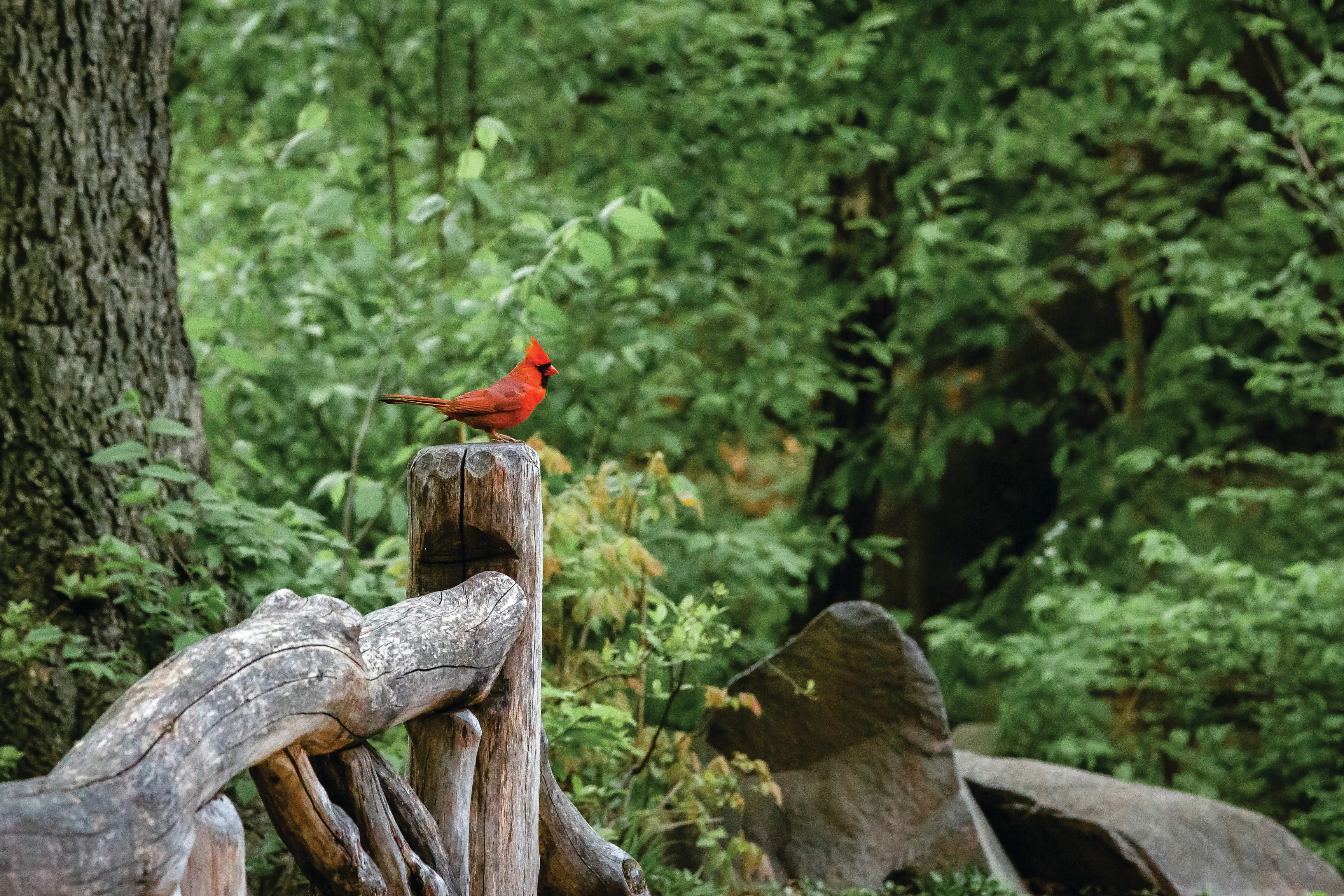
The Conservancy notes there are 200 species of birds in the park, including red-tailed hawks, owls, black-capped chickadees, goldfinches, ducks, doves and geese. There are bats, coyotes, squirrels, turtles, skunks, groundhogs, large-mouth bass, perch, blue gill, brown bullhead, golden shiner, and more.
Don’t feed the wildlife
The park is also filled with native flowers, shrubs and trees that attract bees, birds, butterflies and other pollinators, all of whom also play a vital role in the ecosystem of the park. All the animals, plants, and insects rely on one another for sustenance, and do not require food from humans—although some unfortunately receive it.
Feeding wild animals has unintended—sometimes deadly—consequences. So, the best way to protect wildlife in any park is don’t feed them human food and clean up trash.
Wild animals evolved to forage and eat a species-specific diet—not bagels and slices of bread—which is abundant in Central Park. Many of the ducks and geese there who are fed copious amounts of bread develop angel wing, which causes the feathers to not lie flat with the body and, consequently, leaves the birds unable to fly.
Other consequences include malnutrition, higher risk of disease, unnatural and potentially dangerous trust in humans, loss of their instinct to forage and hunt, as well as pollution and other habitat damage.
When it comes to coyotes, the city’s residents have the right idea. Instead of fearing and loathing them, they respect and revere them. Coyotes have lived in the park since the 1930s and are usually spotted in The Ramble or The North Woods. People understand that dogs are at-risk when it comes to coyotes and keep them on leash and at a respectable distance from them.
If only people living outside the city would follow suit.
Stay on the trails
With 42 million visitors to Central Park each year, human impact and potential damage can add up. It is a good reminder to always stay on designated footpaths. Going off trail can result in trampling fragile topsoil, eroding a vital layer of the ecosystem. In other words, parks can teach you to think about what you can’t see: the microorganisms beneath the soil, the aquatic life under the surface of the water bodies or the fungi on the woodland floor.
Most people think New York City residents are “city people,” completely divorced from nature but Central Park makes that separation impossible. Instead, it teaches us how to achieve a symbiosis between human and non-human animals—to master the art of living together.