

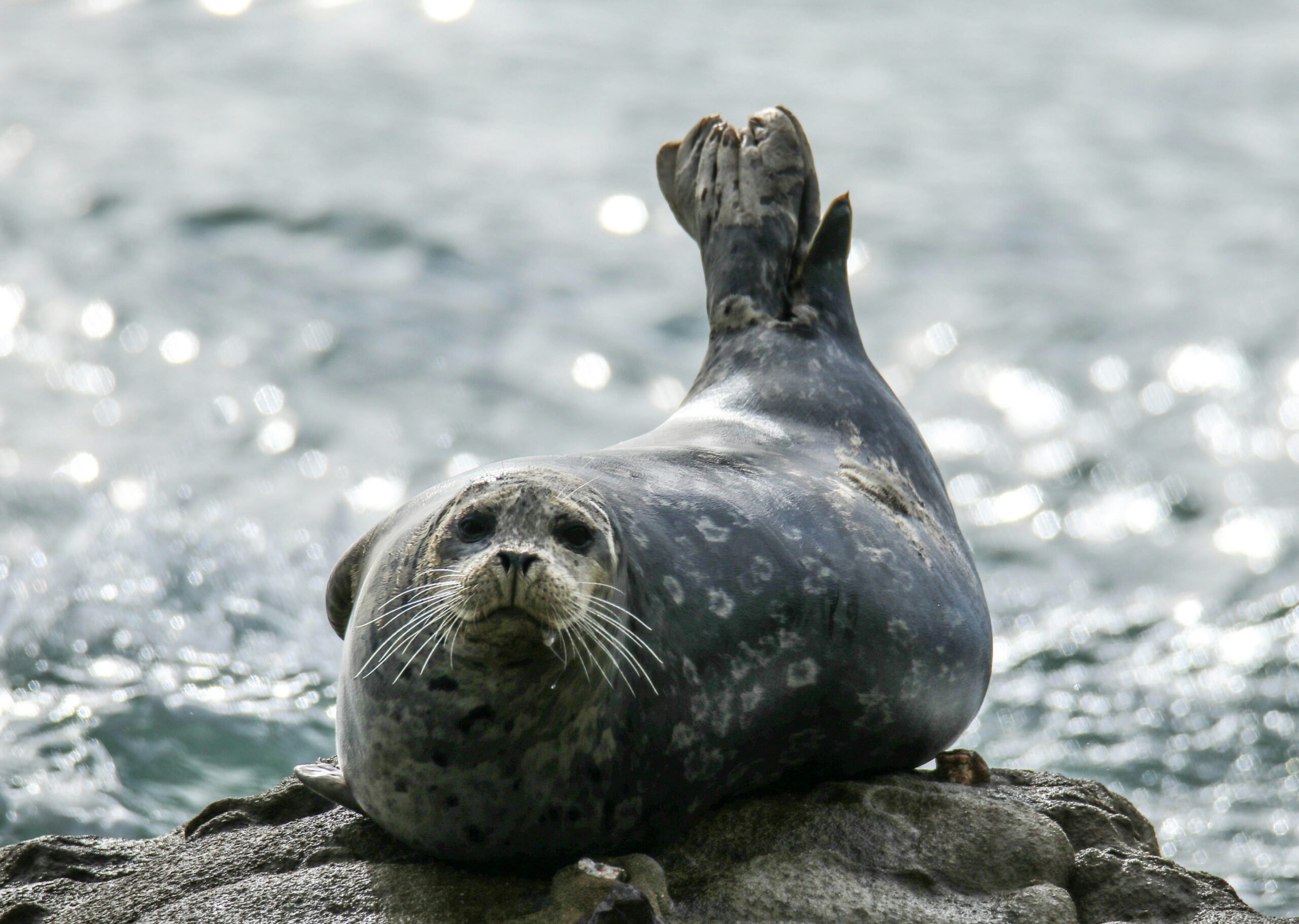
The judge upheld a National Marine Fisheries Service (NMFS) decision to designate nearly 160 million acres of ocean off the Alaskan coast as critical habitat for two species of arctic seals, the Pacific bearded seal and the ringed seal.
The ruling comes as a major win, reversing a short-sighted 2024 decision from a lower court judge that struck down the habitat designation.
Bearded seals, named for the mustachioed appearance, and ringed seals, covered in “ringed” spots, both heavily rely on the rapidly depleting arctic ice. They both birth pups on the ice and the loss of ice directly jeopardizes their abilities to raise their young.
NMFS has been trying to conserve the two seal species for over a decade, first listing the two species as threatened under the Endangered Species Act (ESA) in 2012, a decision that the state of Alaska challenged.
The fight for seal habitat continued in 2022 when NMFS, finally, designated close to 160 million acres of water, spanning much of the Bering Sea, from the Alaskan shoreline to the International Date Line, as critical habitat for the seals.
Alaska again challenged in 2023, suing the agency’s designation of critical habitat. They briefly won, when in 2024, a lower court judge sided with the state, deciding that the designated area was “large.”
Of course it’s large, seals need room to roam.
For now, the seals are a bit safer; this week’s decision reverses that ruling and awards the seals their much-needed habitat designation.
Aside from being much needed, such habitat designation is clearly required in the ESA.
Designation of critical habitat is required under the act, as it offers protection for endangered species in the areas they need most. Protecting animals and protecting their habitats go hand in hand, it’s a bit of a no-brainer.
While we’re applauding the decision and thrilled for the arctic seals, still, more protection is needed. Both species are only listed as threatened, rather than endangered; an endangered listing automatically prohibits a wide range of activities, which make it difficult for one to mettle with an at-risk species, while a threatened listing doesn’t necessarily demand the same.
The threats of oil and gas drilling and fishing encroaching on their habitat persist, as does the threat of melting sea ice due to climate change.
Still, this groundbreaking and hard-fought decision should serve as a sigh of relief.