

By Dustin Rhodes
One of the busiest—and most compassionate—emergency rooms in New York City sits on a quiet block of the venerable Upper West Side, sandwiched between a council member’s office and a pet food store. The patients don’t arrive in noisy ambulances and aren’t ushered in on gurneys or wheelchairs.
In fact, most arrive in a brown paper bag or cardboard box—lovingly carried by the people who found them. The majority of the injured have wings.
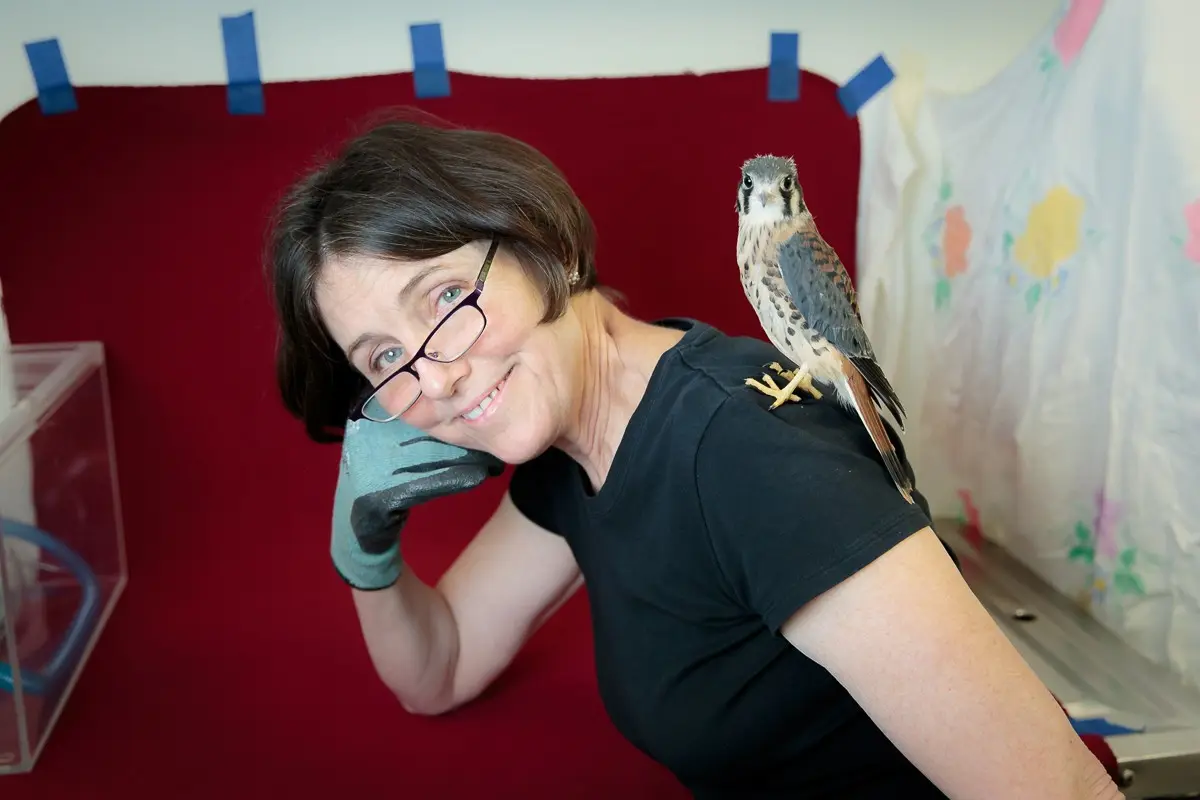
They are headed to the Wild Bird Fund—cofounded by Rita McMahon in 2005, who is also the executive director. It is one of the most renowned and respected nonprofits in New York City. Its mission is straightforward but complex: to provide medical care and rehabilitation to injured, ill, and orphaned wildlife of New York City; release them back to the wild; and educate New Yorkers about the rich diversity of the city’s wildlife and how to help it thrive.
There are about 355 distinct species of birds living part- and/or full-time in New York City.
The Wild Bird Fund typically treats around 7,000 animals per year—everything from common house sparrows and eastern gray squirrels to rarities such as Virginia rails and snowy owls. That’s about nineteen animals per day, give or take. McMahon says this particularly brutal winter has caused more problems for birds and other wildlife in NYC: “About a week after the first big snowstorm, we started seeing between 30 and 50 birds per day—and winter is typically our slower season. The snow covered up all their food.”
Birds—and sometimes other wildlife —are also brought to Wild Bird Fund after flying into the windows of skyscrapers, which are especially dangerous for migrating birds; getting their feet tangled in trash on the street; and other dangers of a city environment. McMahon estimates that between15%-20% of the animals brought to Wild Bird Fund have lead poisoning from the environment, which she believes is often due to construction projects,which is a constant throughout the city.
McMahon also estimates that 90% of all injuries to birds are directly or indirectly related to human activity. She notes that every effort is made to release the birds back into the wild within several days. Injured raptors require more specialized care and are sent to Raptor Trust for rehabilitation. But everyone else receives treatment onsite.
After moving to New York City from North Carolina in 2025, I was introduced to Wild Bird Fund organically, as I live five minutes away by foot and pass by it daily. After seeing an autumnal Central Park Bird Walk advertised in the window, I eagerly signed up. The walk was led by a Wild Bird Fund volunteer named Hendrik, who possesses an almost encyclopedic knowledge of birds. On one cold and rainy fall day, Hendrik showed us kinglets, wood ducks, mallards, eastern towhee, black and white warblers, American robin, white-throated sparrows, house sparrows, common yellowthroat, Canada geese, golden-crowned kinglets, ruby-crowned kinglets, gray catbirds, mourning doves, yellow-bellied sapsuckers, red-bellied woodpeckers, white-breasted nuthatches, magnolia warblers, hermit and Swainson’s thrushes.
The most memorable thing I learned was how to look for and spot these birds—who possess an impressive ability to hide in plain sight. The first time I spotted a barred owl in Central Park, all on my own, I was filled with the kind of rapturous wonder where you think your heart might actually explode.
Perhaps just as profound as the rescue and rehabilitation work Wild Bird Fund does is the way they’ve transformed New Yorkers’ attitudes toward one of the most ubiquitous city dwellers: the common pigeon (or, technically, the rock dove). In every city I have ever lived in—especially the large ones—humans view pigeons as nuisance birds, often referring to them as “rats with wings,” despite their diverse beauty and gentle nature. McMahon thinks many New Yorkers respect them because they are one aspect of nature they regularly encounter; pigeons serve as a bridge to the natural world for the urban dweller.
“Pigeons are very smart, very charismatic—very aware of you when you encounter them on the street. They are watching what you do, to see if you are safe,” McMahon said.
She has had volunteers ask, “Why do you bother with pigeons.”
Her response: “If you hold a baby pigeon, it will change you. You will understand. They are incredibly intelligent.”
In one study, feral pigeons were taught to view breast tissue to determine if it was cancerous, and the remarkable thing is that the pigeons in the study were 80% accurate—which is about the same as humans, she noted.
“They are remarkable birds. They have also been taught math and excel at it,” McMahon said. “It used to be that only 20% of humans lived in the city, but now it’s flipped to 80%. Pigeons in New York City connect us to the natural world and our inner longing to experience nature. But they are interesting on their own. Just pay attention to them!”
If you want to experience the joy of being attuned to birds—in New York City or wherever you are—McMahon has some sage advice: “Look up! Every evening here in the Upper West Side, if you look up you will see hundreds of gulls commuting to New Jersey. In the morning, they are commuting to the East River, and places like that, to feed. In a sense, birds have parallel lives with ours. If you really pay attention, and keep your eyes open, you can witness this yourself. People don’t listen to the cry of the kestrels but they’re all over the city. We’re very rich in some very sexy birds, like peregrine falcons or like Flaco, the Eurasian Owl that became a celebrity. We humans have to learn how to coexist, don’t we? Birds can teach us that.”
To learn more about Wild Bird Fund, please visit: www.wildbirdfund.org