

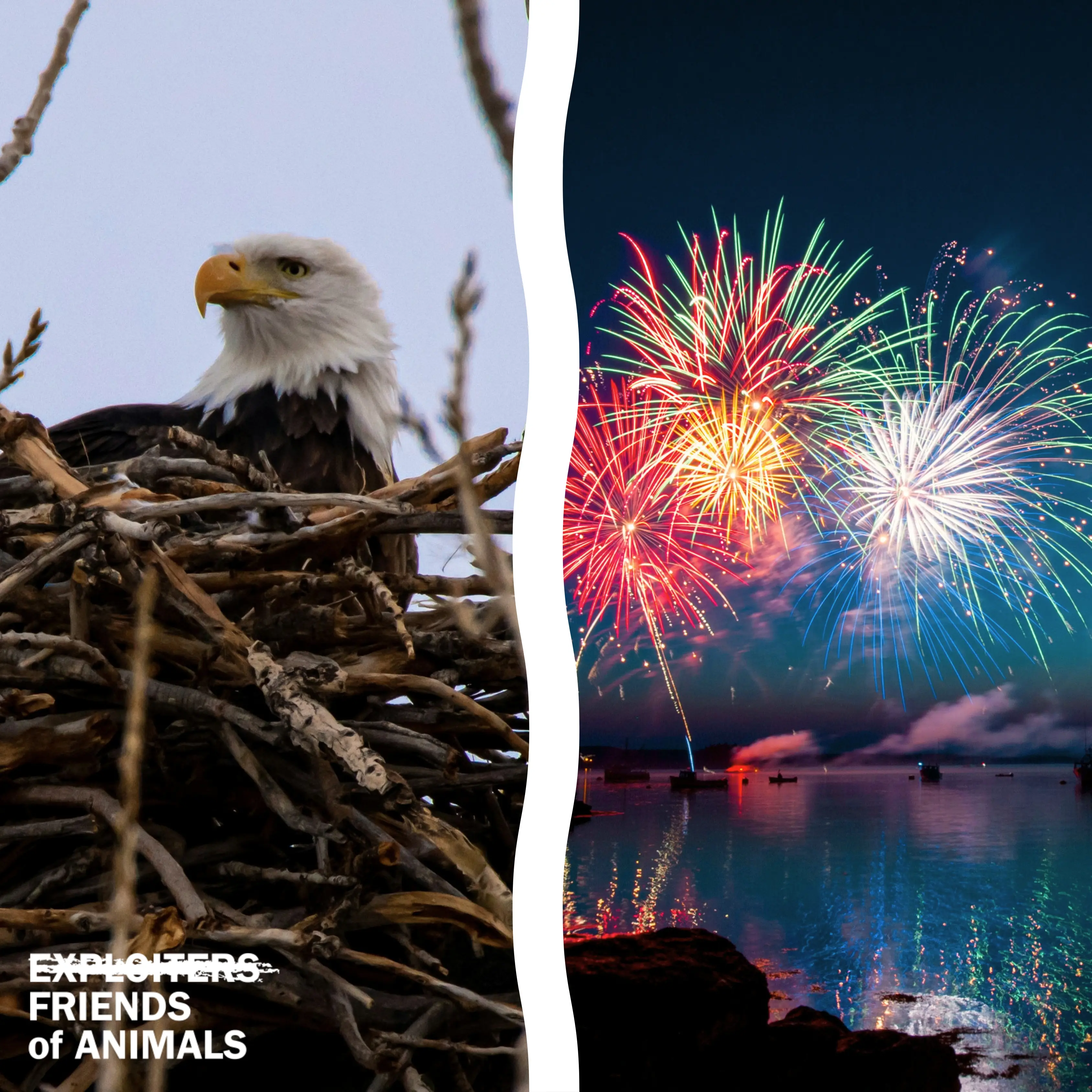
Every year, millions of Americans gather to celebrate the Fourth of July with fireworks displays. But for one Connecticut town, protecting a symbol of American freedom, bald eagles, might be the most patriotic choice of all.
East Hampton, Connecticut, was advised by the Connecticut Department of Energy and Environmental Protection (DEEP) to postpone their lakefront fireworks display to protect a family of bald eagles, said to be nesting nearby.
From late June to early July, bald eagles are in the thick of fledging season, when the young birds are gearing up to leave the nest. But fireworks are incredibly loud, and for the young birds, this means they get “startled out of the nest before they’ve gone through that process of essentially being ready to take the first flight,” DEEP wildlife biologist Brian Hess told reporters.
Those celebrating the holiday will still be permitted to use sparklers, enjoy music, and do everything else they may normally do on the fourth. They just can’t watch the fireworks.
The situation is an important reminder that fireworks are a dangerous situation for animals.
To animals, fireworks are terrifying, unpredictable events that trigger overwhelming stress responses. The sudden flashes and deafening bangs cause animals to panic and can even put their lives at risk.
Dogs and cats both experience sound at a far higher than intensity than humans do, and to them, fireworks sound like war; a study from the University of Illinois found that up to 50 percent of dogs are afraid of fireworks, and both dogs and cats will exhibit this fear by hiding, pacing, shaking, crying, or even fleeing, unable to process the “celebrations” surrounding them.
Such responses have severe consequences. According to Applied Animal Behavior Science, there’s a 30-60% increase in lost pets each year between July 4-6, and July 5 is the busiest day for animal shelters nationwide, according to Shelter Animals Count.
It’s also reported that one in five lost pets go missing after being startled by loud noises, like fireworks.
The shock of the sudden explosions causes wildlife to flee, too.
Researchers at the University of Amsterdam found that when a firework display occurs near nesting birds, they’ll fly off out of panic, which can lead to an extreme number of deaths, because the panic-stricken birds will smash into trees, houses, and other solid objects they cannot see in the dark.
In some cases, the consequences can be even more drastic. There are reports of stressed birds flying out to sea from firework-induced panic, and flying out so far, they’re physically incapable of making it back to land, as uncovered in a JSTOR article.
The risks of fireworks can extend beyond stress responses, too. Fireworks leave behind chemical residue and debris that can make their way into waterways and ecosystems. Some animals, especially dogs, may even eat fireworks, which can contain chemicals that are corrosive to the lining of the digestive tract; this is painful and can result in bloody vomiting, diarrhea, serious dehydration, and secondary infections.
These concerns are not theoretical; thankfully, though, awareness for the risks fireworks pose to animals is increasing, and some communities, like East Hampton, Connecticut, are already beginning to take action.