

Milan Bull, senior director of science and conservation at Connecticut Audubon, has been birdwatching for 69 years. He started as a boy in the salt marshes at the mouth of the Housatonic River in Milford, Connecticut.
After all these years, fall migration never ceases to amaze him—he is always shocked by how many birds, such as the white-crowned sparrow, Eastern wood pewee and gold-crowned Kinglet, pass through Connecticut!
“On any given night, it can be a few thousand to several hundred thousand. It all depends on the weather,” Bull explained. “Southeast winds generally push birds further north when they are migrating, whereas northwest winds tend to push birds further south through Connecticut when they are migrating.”
I was astonished too to learn that on Sept. 30, 3,284,800 birds, including the American Redstart and yellow warbler crossed Fairfield County, Connecticut, where I live, according to BirdCast, a platform that uses the same weather radar technology behind daily forecasts to track migrating birds. By the way, robins and blue jays migrate too!
Sept. 25 was a record-breaking night of bird migration in the U.S.—BirdCast tracked more than 1.2 billion birds streaming south to their wintering grounds—the largest single-night total ever recorded since the collaborative research project began mapping live migrations in 2018.
BirdCast data is not only mind blowing, but it also lets the public know when birds are moving in their area so they can take necessary precautions to protect them. A dashboard provides radar-based measurements of nocturnal bird migration at county and state levels in the contiguous U.S. and people all over the country can subscribe to migration alerts to learn when intense bird migration will occur.
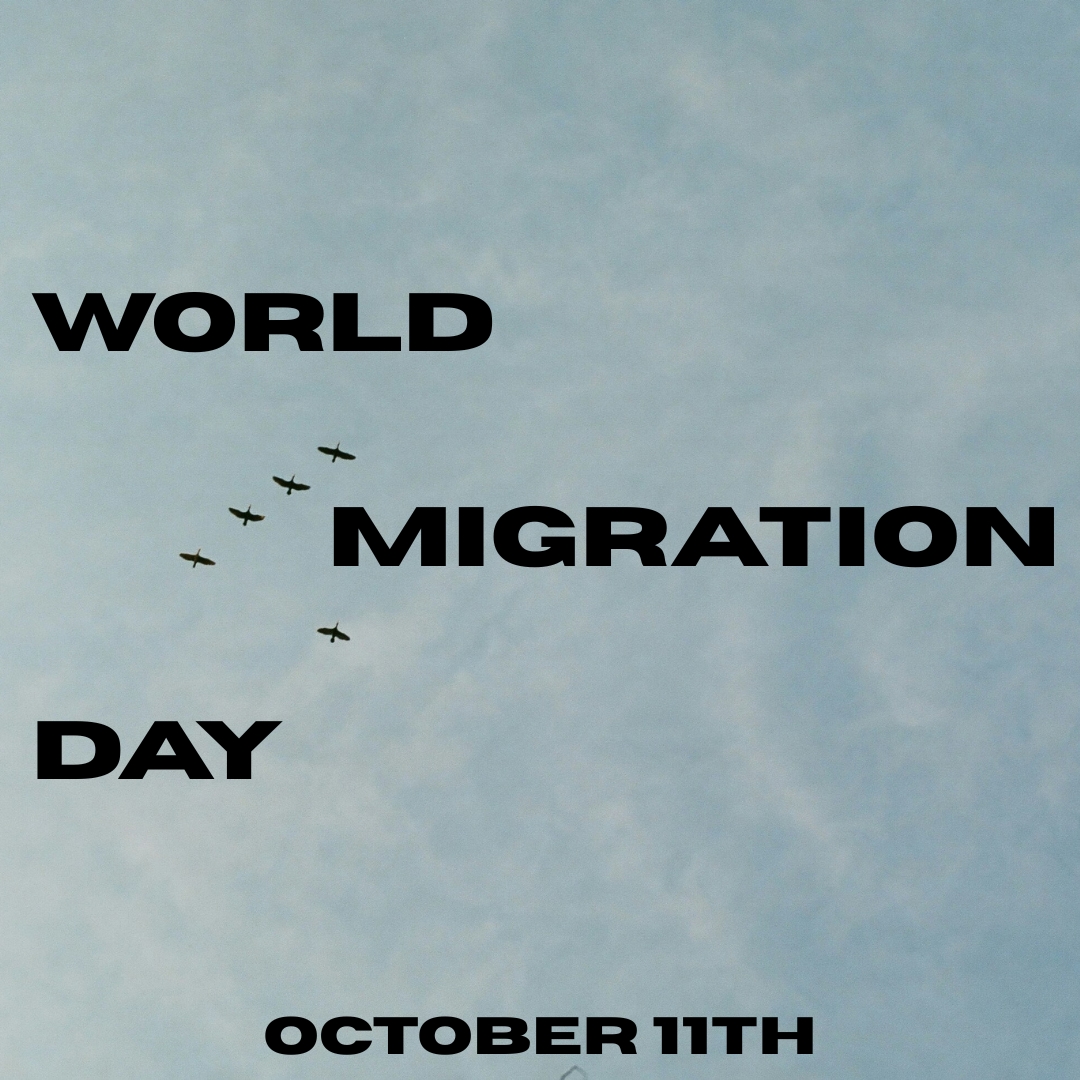
In honor of World Migration Day on Saturday, Oct. 11, I asked Bull and my wildlife rehabber friend what the biggest threats to migratory birds are and what we can do to make birds’ journeys safer. The biggest threats: window collisions, light pollution, outdoor cats and loss of habitat as well as pesticides and rodent poisons.
Because 95% of birds depend on insects at some time during their life cycle and raptors depend on mice and rodents to survive, never use pesticides that contribute to the declining numbers of butterflies, dragonflies and other insects, and if you need help managing a mouse or rat infestation, only hire companies who do sanitation and exclusion work. Never use anticoagulant rodenticides. Raptors and other animals are dying a slow agonizing death from internal bleeding after consuming poisoned rodents who’ve taken the bait from those ubiquitous black boxes you see outside grocery stores, around housing developments and town parks.
Window collisions: Every year, more than one billion birds die in collisions with windows in the United States. And 44% of them involve homes 1-3 stories high.
What you can do: Identify windows that have already caused collisions— large windows and glass doors, especially those that reflect habitat (including sky) or through which you can see sky or greenery; and windows across from bird feeders, bird baths, and fruit-bearing plants.
Making them visible by applying patterns that are correctly sized and spaced on the outside of glass surfaces is key. If your pattern consists of stripes, they should be at least one-eighth of an inch wide. If you use dots or similar shapes, they should be at least one-quarter of an inch in diameter. You should be able to see the pattern clearly from 10 feet away. Resources: Feather Friendly www.featherfriendly.com/collections has small to large format solutions including ABC Birdtape. Birddivert and Feather Friendly Pro.
Light pollution: In North America, most birds migrate at night between 10 p.m. and 4 a.m. These night migrants rely on dark skies to navigate ancient flyways, using the stars and moon as their compass.
What you can do: Turn off unneeded lights. Close curtains or blinds at night to prevent light spill from the inside out. If outside lighting is necessary, opt for down shielded lights with motion sensors and timers.
Outdoor cats: Predation by domestic cats is the number one direct, human-caused threat to birds in the United States and Canada. In the United States alone, outdoor cats kill approximately 2.4 billion birds every year, according to the American Bird Conservancy.
What you can do: Provide them with entertainment indoors or a catio, an enclosed structure that lets cats hang out in a safe outdoor environment.
Since birds rely on stopover sites to refuel, rest and avoid predation during long journeys, habitat loss makes it harder for them to find food, safe roosts, and rest areas, forcing them to expend more energy and increasing their overall mortality risk.
So next time you are doing any planting, choose native trees, shrubs, grasses and flowers.
Bull pointed out that CT Audubon’s own Smith Richardson Wildlife Preserve in Westport is a grand example of the benefit of having plants native to your community to provide the food and shelter birds need during spring and fall migration.
Until roughly 2016, there was a 36-acre section that was a thicket of weeds and invasive shrubs and vines such as barberry and Asiatic bittersweet with little value to birds and insects were removed. Volunteers and staff replaced them with more than 3,000 native trees and shrubs that provide seeds, fruit, and nectar year-round for birds, butterflies, bees and other wildlife. Two new two-acre pollinator meadows buzz with insects. Small plots of seed-producing grasses ripen in fall, in time for songbird migration.
“It’s an absolute bird magnet,” Bull said.
Nicole Rivard is editor of Action Line & media/government relations manager for Friends of Animals.