

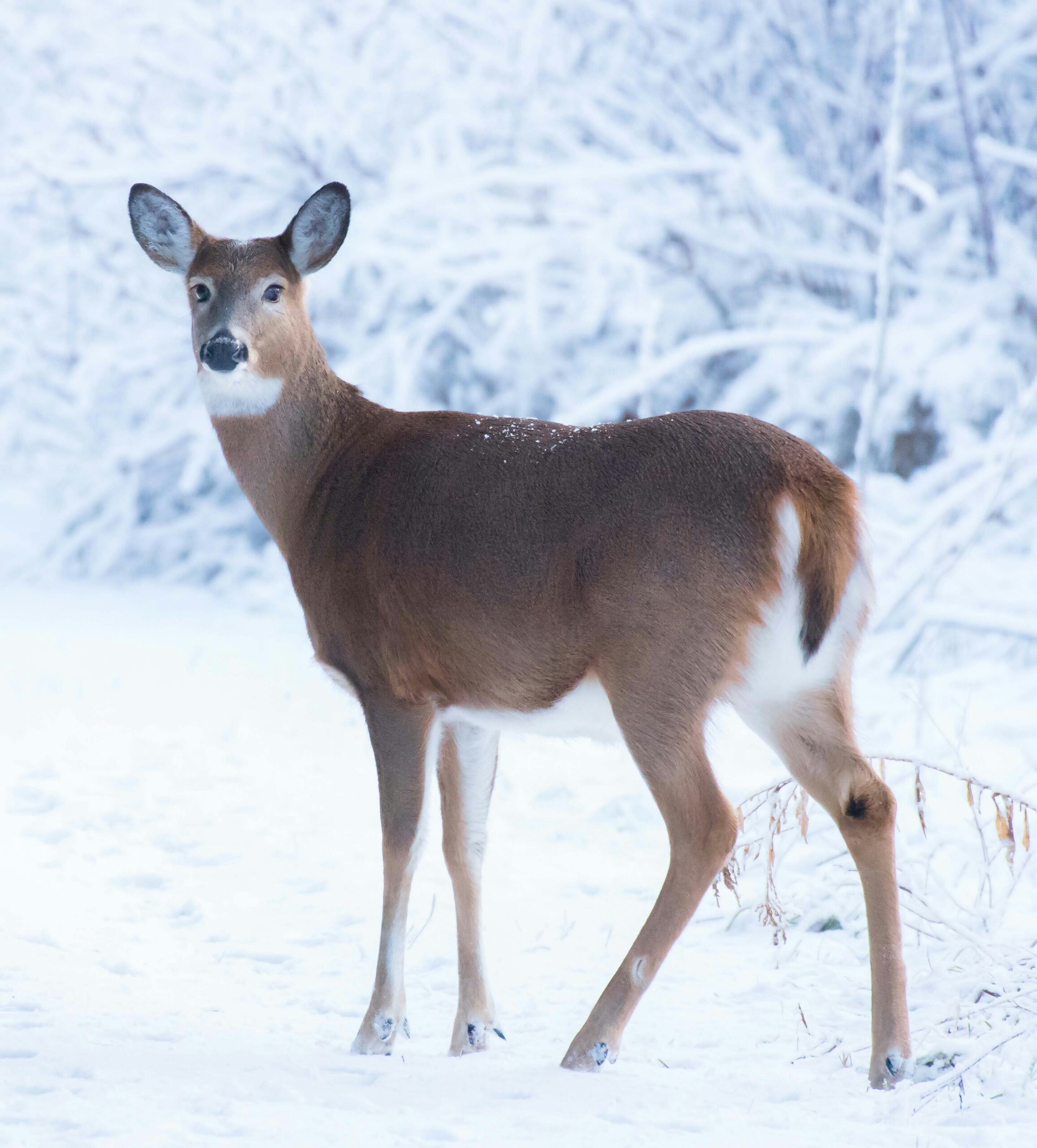
As we here at Friends of Animals are still making our way through the extreme cold, we’re being inundated with questions from concerned members. One that keeps coming up: where have all the deer gone?
Every winter, the same deer that seemed abundant just a couple of months ago are suddenly nowhere to be found. So, where’d they go?
Primarily, it’s important to note that deer are well-equipped to outlast the cold. Deer, lucky enough to be spared by last season’s hunters, begin their winter prep in the fall, when they’ll put on as much fat as they can. These fat reserves become a vital food source as the winter progresses, and food grows scarcer. Deer can lose up to 20-30% of their bodyweight over the course of a winter, so this fall-time fueling is essential.
They also grow winter coats featuring a dense, insulating layer of underfur.
Yarding
The reason why deer sightings become so sparse in the winter is due to a phenomenon known as yarding. Deer must find somewhere to lay low and fortunately; they’re not left to do so alone; deer find strength in numbers. Together, they enter a yarding phase.
In yarding, deer form small herds or family groups, a stark departure from their often-solitary summertime states. These packs congregate in strategic areas. They’ll herd in dense forests, fields, or valleys to escape the harshest winds and winter weather.
When they group together like this, deer reap the social benefits. They no longer have to work as hard to move through the snow, as it’s now a group effort. They can huddle together for warmth. The added sets of eyes mean they can work together to scan for predators and other threats, too.