

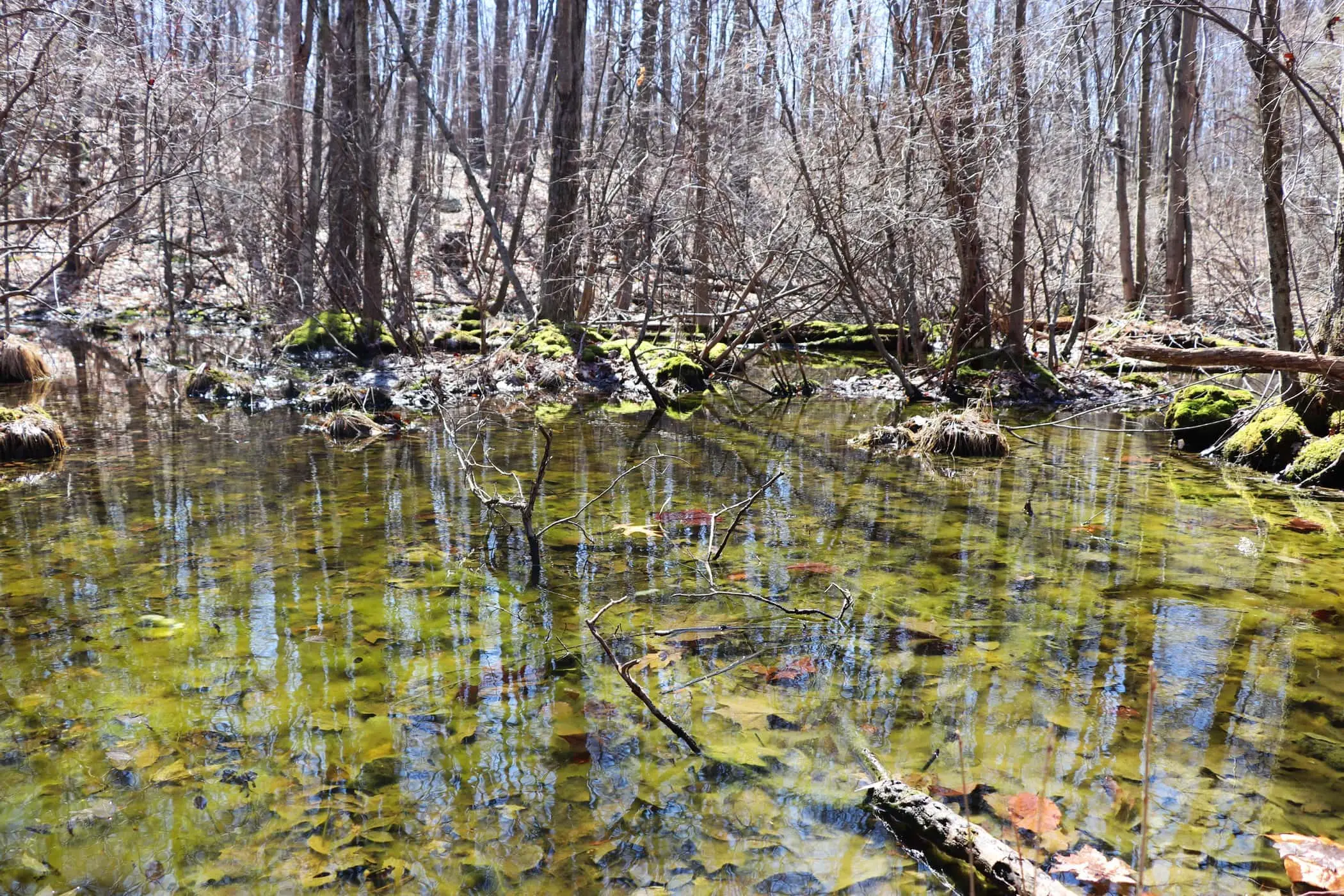
On March 1, I moved into a cottage located on a property on a serene, wooded street in Wilton, Connecticut. It didn’t take me long to feel right at home because at dusk peepers and wood frogs start serenading me. I’m overcome with nostalgia because there was a pond in the backyard of my childhood home, and my family and I experienced and relished a similar spring symphony.
The icing on the cake at my new digs is that barred owls lend their song-like sound, and it carries well through the trees to my front door. I know from Friends of Animals’ legal work to protect barred owls what they sound like—they are known for a distinctive hooting call, often described as ”Who cooks for you? Who cooks for you-all?”
Interestingly, I found out from my new landlords that what’s on their property is not a pond but a vernal pool; it only fills with water from snowmelt, high groundwater, and rainfall for a brief time in spring and fall. Vernal pools are generally small—often less than an acre—but their ecological impact for wildlife is huge. How lucky am I to have a front row seat!
I feel a little like Henry David Thoreau, who in his March 15, 1860, journal entry, wrote about the excitement surrounding these areas: “How suddenly they awake! Yesterday, as it were, asleep and dormant, today as lively as ever they are. The awakening of the leafy woodland pools.”
They sure are teeming with life. Vernal pools in the northeast provide important breeding habitat for amphibians such as wood frogs, spring peepers, and salamanders and some invertebrates like dragonfly larvae and fairy shrimp because they don’t contain any fish predators. So, for frogs and salamanders, their eggs can develop into young amphibians.
What’s fascinating is that vernal pool amphibians will return to breed where they were hatched.
Of course, some juvenile amphibians who disperse into the surrounding forest will become prey for a variety of wildlife, including raccoons, coyotes, snakes, hawks, turkeys, bats, and numerous other predators.
Because vernal pools are often dry by summer, people commonly fail to recognize their importance in sustaining native species. Now that you know how critical these pools are, you would think they are protected, right? Well, sort of.
Many towns enforce mandatory buffer zones—often up to 100 feet or more—to mitigate development impacts on biodiversity. But that isn’t enough. Spotted salamanders for example, can move miles from the pool into the forest and wood frogs thousands of feet.
The good news is there are things you can do to help protect vernal pools and the species who need them to survive:
• Slow down! Be careful driving on warm, rainy evenings throughout April, especially in areas near vernal pools, as amphibians may be crossing the road. Getting to these vernal pools from upland forests where they spend the winter can be challenging and dangerous—some of these slow-moving creatures travel up to a mile or more. Unfortunately, because forest and wetland habitats are often disconnected by development, many encounter roads and long driveways.
• You can join a volunteer group in your area to help move them safely across roads—called amphibian crossing brigades—on certain nights in spring for areas known to have lots of amphibian movement. If you are aware of a migration hotspot, consider taking an alternate route to your destination or simply avoid traveling on smaller, wooded roads. You can also speak with your local town officials about installing amphibian crossing signs.
• Do not disturb the vernal pool when it is wet or when it is dry. Leave any sticks or leaves that fall into it as they provide food and habitat for vernal pool animals.
• If you have a vernal pool near your yard don’t use toxic fertilizers or pesticides on your lawn. Amphibians readily absorb pesticides through their skin, which can cause deformities and reproductive problems. Also, if you have a septic system, make sure it is working.
• Keep out! This means don’t let kids throw rocks or sticks in the pools and don’t let dogs play in the water. Strong, unnatural disruptions in the water might kill the eggs or destroy the nests.
• You can view vernal pools from the edge and use binoculars to get a closer look if you want.
If you are like me and curious about your rowdy neighbors participating in the vernal pool parties during spring nights, here’s a who’s who of vernal pools in the northeast.
Wood Frogs are the first to emerge in spring. The males call out to females with low-pitched, guttural clucking, often described as sounding like a duck. Females lay one egg mass that can contain more than 1,500 embryos, which hatch into tadpoles between 9 and 30 days later. About two months later, anywhere from early June to mid-August, tadpoles transform into miniature frogs about the size of a thumbnail.
Wood frogs are often referred to as a biological miracle. They hibernate by nestling down in leafy litter on the forest floor, unlike most frogs who hibernate deep under water. Those frogs’ body temperature never falls below freezing. Not so for wood frogs. They allow up to 65% of their total body water to freeze. They naturally produce a high concentration of glucose, which acts as an antifreeze-like substance, to block the formation of ice crystals. This prevents the frogs from freezing completely, allowing them to survive the winter partially frozen.
Spring Peepers. In contrast to the wood frog, male peepers produce a high-pitched, shrill, single-note whistle (it can reach over 100 decibels). According to the Minnesota Department of Natural Resources, “they can be heard from as far as one mile to two and a half miles depending on the number of peepers in the chorus.” Like wood frogs, they’re singing their hearts out for one reason: females will choose a male with a louder and more frequent song.
Spotted salamanders are elusive. In the summer, they disappear from the human world by burrowing up to six feet underground in wet burrows. The adults, around eight inches long, hunt earthworms, insects, and even small vertebrates hidden beneath the mud. When spring arrives, they emerge from underground but are only active on rainy nights. Males perform a dancing courtship, depositing sperm packets on the pool bottom, which females pick up to fertilize 100–300 eggs.
Fairies live in vernal pools, fairy shrimp that is. They are ethereal little animals with featherlike legs, but they can also be quite comical. That’s because they swim upside down, using their 10 pairs of swimming legs to propel them. They feed by straining microscopic plant- and animal-like material from the water. Fairy shrimp are eaten by many of the other animals found in =and around the pool, such as amphibians, owls, herons, and aquatic insect larvae such as diving beetles and caddisflies.
Nicole Rivard is editor of Action Line and media/government relations manager for Friends of Animals.