

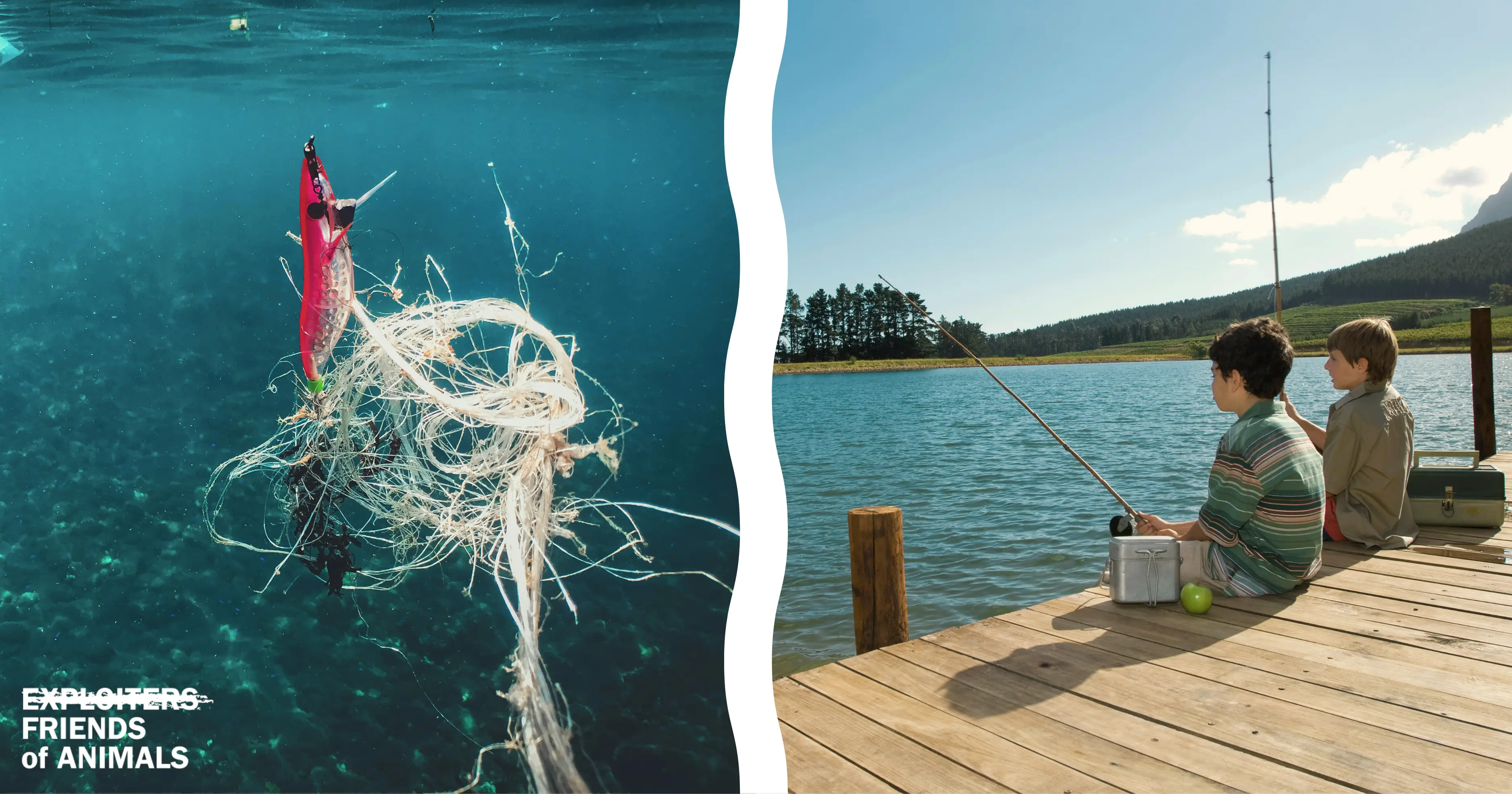
In Fairfield County, Connecticut, summer fishing camps are in full swing, slamming parents for $325 to enlist their 7-year-old and older kids in four-day recreational fishing each week.
In most states, children under 16 don’t need a license to fish in public water. Fishing camps pitch morning or afternoon sessions Mondays through Thursdays with no poles needed. The camp provides equipment and bait while kids are taught to bait hooks and toss lines into waterways from shore, not boats. Are these memories instructive? What exactly are kids learning?
In northern California, one Friends of Animals’ member said everyday she goes to a fresh or saltwater beach and cleans up fishing lines and hooks. In my coastal town, boys crowd docks and bridges to throw baited fishing lines into a stream called Five Mile River. After they leave, during a nighttime walk around town, I too am routinely pressed to remove the discarded litter I find.
Some of this litter includes severed heads of fish, whose dead eyes stay open. I find abandoned hooks and lures on docks, or the ground, along with fishing line, which must be removed to prevent entanglement and injury to sea birds, other wildlife, or dogs. I even pick up trash bags and cans and quietly curse those who don’t give a thought about polluting our waterways, or the harm caused under the guise of having fun.
It’s equally distressing to see seabirds such as osprey, seagulls, cormorants, and raptors like bald eagles overhead looking for fish like bunker, striped bass, trout, killifish, or silversides. They shouldn’t have to compete with beginner anglers encouraged to find sport in targeting fish to bite the bait and get caught on their hooks.
When a fish is curious or hungry, it grabs the bait with its mouth, and the hook is hidden inside or next to the bait. When the angler yanks their fishing rod upward, the sharp point of the hook is pulled into the fish’s mouth so that it anchors the hook in place.
Fish are sentient, have nerves and feel pain. On hooks they struggle to escape and breathe. They suffocate out of water. That aspect of harming and killing a fish is sidelined by having kids pose for photos with large, dead trophy fish, as though they deserve applause for imposing such misery.
Do know this, if the fish are tossed back into the water, injured fish may not live long enough to see the next day. Mouth damage can prevent a fish’s ability to eat properly. Ten-year-old children are typically not bringing fish back to a kitchen where they’re cleaned and prepared for someone’s meal.
Fishing camps are billed as “fun memories,” not lessons in feeding yourself. Children can see plants as food and eat something else anyway.
About 9% of the public fishes for recreation, and this number has declined slowly over 40 years. Surveys indicate less than half of licensed anglers bother to renew licenses each year due to high costs of gear, gasoline for boats, and overall decline in bass and other fishing.
The sport is collapsing due to climate change, and the loss of habitat has defeated any concept of “sustainable” fishing.
It’s a crime against nature that fish populations are declining so people can escape their screens, or bond with family, or brag about the size of the fish they caught. Anglers fish over state limits, fishing tournaments are a free-for-all and devastate fish populations. Let’s stop pretending fish are our food; they’re not. Fish-catching isn’t benign.
For instance, consider that some 80 percent of the fish Americans consume is imported; much of it bottom trawled. On a global level, bottom trawling is a hideous fishing practice that kills about a quarter of the world’s wild-caught fish—indiscriminately killing 19 million tons of marine life every year.
One recent guest essay writer to The New York Times, Paul Greenberg, who teaches New York University’s Animal Studies Program, has covered oceans for two decades and seen all kinds of destruction. He wrote, “I have stood on the deck of a Louisiana shrimp trawler and watched 10 pounds of wildlife shoveled dead off the deck for every pound of shrimp that went in the hold.”
This summer, don’t take a kid to fish. Don’t eat fish. Instead, serve plant-based, vegan food for supper. Let’s truly respect the health of the oceans, birds, and marine life whose environments we share by not competing with them for their food.
Priscilla Feral is president of Friends of Animals.