

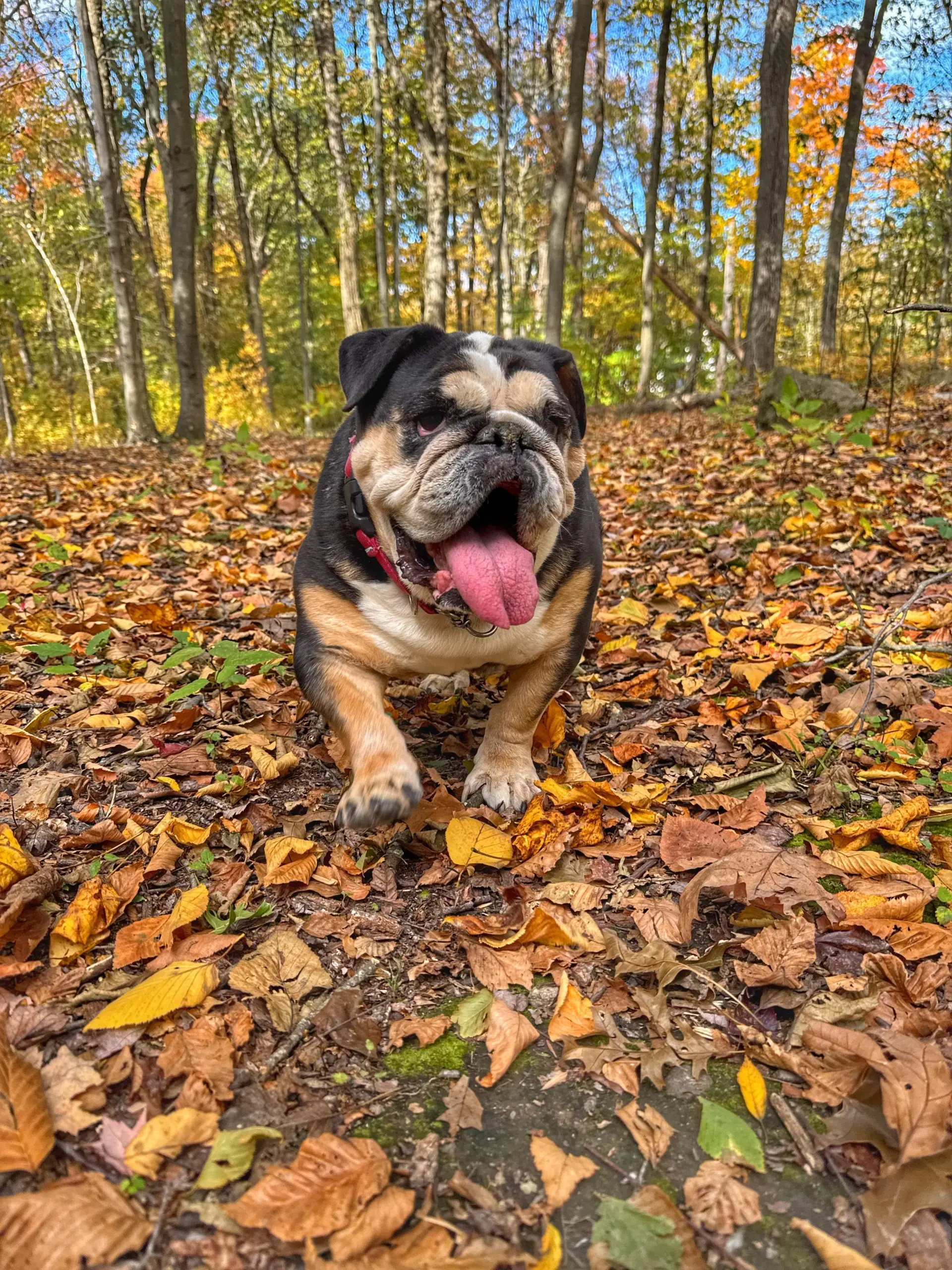
It’s National Senior Pet month, and it just so happens that my English bulldog Lila turns 10 in November. At Friends of Animals, we love talking about and celebrating how rewarding it is to have an older pet.
FoA President Priscilla Feral has adopted multiple senior dogs and recalled poignant advice she received from Long Island Bulldog Rescue when she was thinking about opening her home to 8-year-old Sammy, a bulldog-basset mix.
“Adopt a dog who just needs to be loved for the rest of their life.”
Speaking of being loved, I have found that as a senior, Lila wants to cuddle more. And that’s a win-win for both of us.
Overall, bringing a senior pet into your life means you’re providing a loving, secure home where the pet can peacefully live out their golden years. There’s nothing more satisfying than that.
Since a lot of senior pets were once in a home, they usually have good manners after acclimating to a new routine. When I had to move into a new apartment suddenly back in March, Lila adjusted so quickly and fit into our new surroundings like we’d been there forever. It was remarkable.
And unlike puppies who have a teething period to go through, I never have to worry Lila is going to chew on shoes, furniture, etc.
The biggest misconception is that adopting a senior dog means immediately taking on massive medical expenses or imminent end-of-life planning. However, many who end up at shelters are in excellent health and are still quite active.
While Lila’s walks may have gotten shorter because she has a little arthritis, she is still plenty active and enjoys strolling around local nature preserves and land trust properties. In fact, on Nov. 15, I had a hard time getting her to head back to the car, she just wanted to head deeper into the woods! By the way, she loves the foldable ladder I got for her to help her get in and out of the car as she ages.
I was recently reading up on how movement still matters in senior dogs. Controlled exercise supports the body exactly where arthritis weakens it. It increases circulation to muscles and joints and decreases stiffness in the joint capsule and surrounding soft tissue. And it maintains or rebuilds muscle strength and supports cardiovascular health.
Lila may take more frequent breaks when we are out on a trail but guess what; I love that because it forces me to slow down too and be present. That’s a gift.
The veterinary practice I take Lila to pointed out some other reasons to consider a senior pet:
- Because the pet is already full grown, there are no surprises about their size. You also can see exactly how furry they are, so you’ll know how much grooming they’ll need. And, if the shelter has the senior pet’s medical history, you’ll also know if the pet has a medical condition and the level of care that’s required to manage the condition.
- Senior dogs are typically housetrained and likely know a few basic commands, such as sit, stay, and lay down. Older dogs may be ready to just slide right into leisurely strolls, playing fetch and long naps at your feet. If you’re interested in teaching them some tricks, senior dogs tend to learn tricks easily because they have a longer attention span than puppies.
I love how Kristen Brauer, a veterinarian at Healing Hand for Pets in St. Petersburg, Florida, describes the impact of a senior pet in an article on Chewy.com
“There’s a deep emotional reward in knowing you’ve given a senior dog comfort and love in their golden years,” Brauer said. “It’s a bond built on mutual respect and quiet gratitude.”
Nicole Rivard is media/government relations manager at Friends of Animals.