

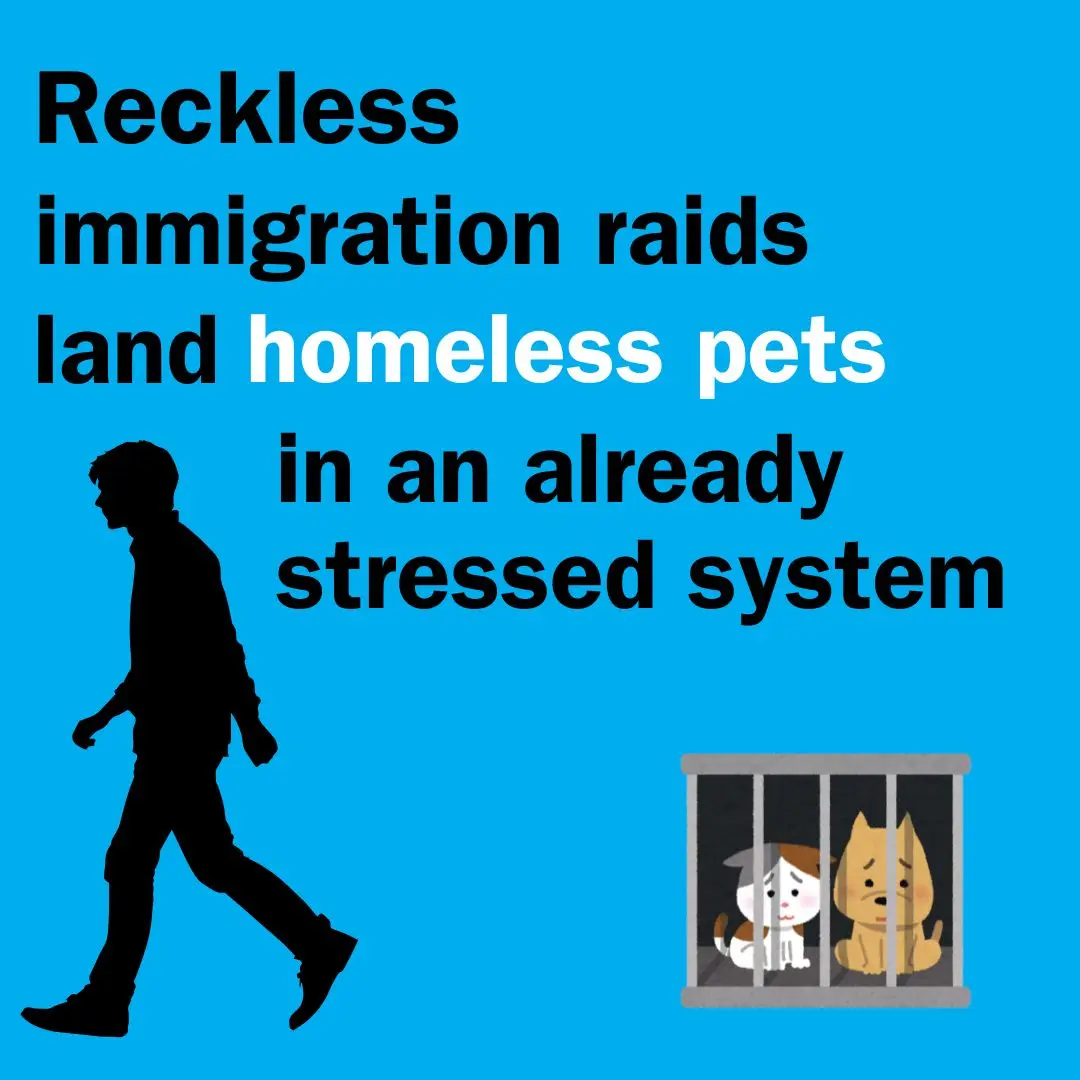
Here’s how you can help
Denver resident Aribela Arreta, founder of the nonprofit We Matter 2 Pet Rescue, recalls a Columbian family reaching out to her for help in the spring. As U.S. Immigration and Customs Enforcement raids ramped up, family members made the decision to self-deport on June 10 but could not take their two seven-year-old English bulldogs—Mimi and Rambo—with them.
“I got them spayed and neutered and then found them wonderful homes. I was able to send the family pictures and let them know their babies got adopted,” Arreta told Friends of Animals.
Unfortunately, it was not an isolated incident, and she believes the situation will worsen.
Another family called her because they were getting deported and had two cats with kittens. And then there was a little dog named Gigi. A woman’s husband had been deported to Venezuela, so she and her young children were about to leave to be with him and could not bring their beloved dog.
“It is a sad, difficult situation, and we just try to help as many as we can. You can tell some of these families really love their animals. They are family members,” she said.
Arreta, who is bilingual and trusted in Hispanic neighborhoods in Denver because she helps organize low-cost spay/neuter clinics, started experiencing a spike in calls back in March from community members asking her to take in dogs left behind due to their owners being expelled.
In August, she fields calls every other day from families who are like “Hey, I have a dog, because so-and-so got deported, can you help us out?” Sometimes people are afraid to go to shelters because either they don’t have an ID or they have this perception of animals being killed at a shelter.
Since the Administration’s aggressive attacks on immigrants began, Arreta has helped more than 85 pets after their families were deported or self-deported.
Compounding the shelter and rescue crisis
The arresting and treatment of undocumented people without criminal backgrounds is a national disgrace. Furthermore, pets being separated from their families because of the Administration’s actions could not have come at a worse time.
Friends of Animals has been reporting on shelter crisis nationwide for the last couple of years. The 2025 Mid-Year analysis Report from Shelter Animals Count, a non-profit that maintains a database of U.S. sheltering statistics, found that 290,000 dogs and cats have been euthanized in shelters so far this year.
The Department of Animal Care and Control of Los Angeles County, which operates six shelters, has been taking in animals since mid-June due to the deportation operations—six cats and 23 dogs. Out of those 29 pets surrendered, DACC has found placement for 24.
Its message to the public—adoption and fostering shelter pets saves lives and is urgently needed!
“People can help by adopting. If someone cannot provide a permanent home at this time, they can foster, volunteer, network animals in our care throughout their communities, and they can help by donating,” said Chris Valles, public information officer with the DACC.
DACC also emphasizes the importance of looking out for vulnerable families in your community. Since a person can be detained at work and taken into custody, it is crucial to help people at risk arrange for friends and neighbors to check in on them daily and have a “disaster plan” in place if they don’t return home.
A plan should involve:
• Connecting with trusted family members or friends who may be able to care for their pet, either temporarily or permanently.
• Creating a pet bio that includes the pet’s personality traits, any dietary restrictions, favorite toys, medical history, and microchip information. This will help potential caregivers understand a pet’s needs and make the transition smoother.
If finding adoptive homes is not an immediate option, DACC care centers can place animals in foster with members of the public, which sets up a pathway to finding permanent placement and alleviates overcrowding in the care centers.
“If a family finds themselves in a position where they can no longer care for their pet, staff will be there to provide alternative options when possible or take in the pet if all other efforts have been exhausted,” Valles said. “We understand that this is a challenging time for many, and we want to provide guidance to help families prepare for potential changes in their circumstances.”