

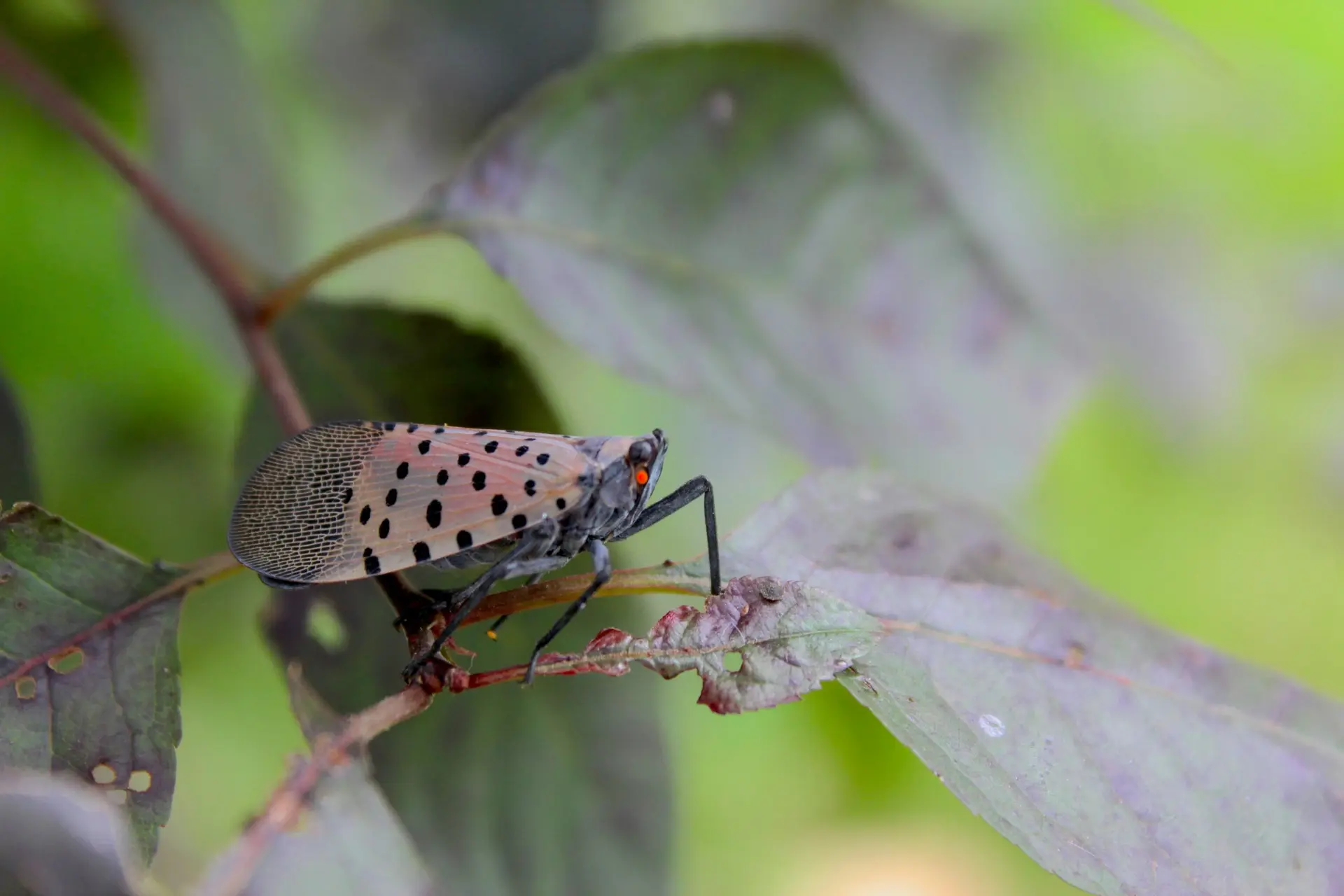
The command is everywhere: see it, stomp it; spotted lantern flies are being squashed by millions of Americans, and almost none of them are pausing to ask why.
Nymph sightings are crowding the internet along with diagrams depicting the SLFs life stages, coupled with reminders to kill the larvae, nymphs, and adults wherever they’re spotted.
We’re being told, repeatedly, that killing spotted lanternflies is a civic duty of ours, and that our environment will suffer if we don’t.
Recently, I’ve even received ads for novelty tees with images of SLFs that say “Stomping Season,” “Professional Stomper,” and even “Spotted Lanternfly Extermination Club.”
But has anyone taken pause to ask: isn’t this a bit insane?
As it turns out: yes! There are plenty of researchers who have expressed concerns with overly enthusiastic calls to mobilize stompers.
Bekka Brodie, an entomologist in charge of Columbia’s Insect Ecology and Behavior Lab, expressed concerns about encouraging the public to carry out a mass killing event this past November, when she told Columbia’s School of Professional Studies newsletter that so far, she hasn’t seen any data showing whether stomping is effective. “No one’s actually studied whether the population has decreased as a result of this community control effort.”
We’re told they’re an invasive species with no predators, yet personally, last summer I watched spiders and mantises devour them. In fact, these chance encounters I had were perhaps more common than I’d realized.
According to Dr. Michael Raupp, a University of Maryland entomology professor, there are already thousands of observations of indigenous animals eating spotted lanternflies.
Raupp went on to tell Maryland Matters “The thing that regulates their population are predators, parasites and diseases. So, by stepping on some spotted lanternflies, it’s kind of like spitting in the ocean and thinking you’ve turned back the tide.”
Raupp reiterated that “eventually, Mother Nature will take care of this,” noting that some areas have already experienced significant decline in their SLF populations due to an increase in predators and disease.
As far as the threat of destruction spotted lanternflies pose, that, too, is much overstated.
According to a Penn State University Study—where researchers allowed spotted lanternflies to remain on trees for years, much, much longer than they’d stay there in the wild, to see just how much damage they cause—the spotted lanternfly had killed black walnut saplings but did not cause intense damage to most established hardwood trees as previously thought.
Nymphs may gather on vegetables, roses, or other small plants, and while adults prefer and thrive on the Tree of Heaven, an invasive plant, they will also settle for woody trees, including beech, black and paper birch, cherry, maple, sycamore, oak, and others.
But the Penn State study proves they’re not killing these trees. They allowed spotted lanternflies to remain on trees for years, much, much longer than they’d stay there in the wild, to see just how much damage they cause.
According to Dr. Kelli Hoover, a professor of entomology at Penn State and one of the study’s authors, “Importantly, over the four years, none of the trees died. Therefore, in a natural setting where the insects are constantly on the move, we would not expect significant negative impacts on forest or ornamental trees.”
So, they’re not killing trees, there’s no problem to be solved; and even if there were, stomping wouldn’t make a difference.