

Originally appeared in the CT Post
Some of my favorite fall memories as a child involved helping my parents rake up the leaves.
For $20—no small fortune—I’d spend my fall Saturdays meticulously gathering the dried leaves into piles, and those piles into bigger piles. Our Connecticut yard was enveloped in a dreamy canopy of oaks, which I remember showering me with too many leaves to keep up with. For every pile I tarped up, a fresh pile’s worth would have spawned. The trees were playfully undoing my work. So much so that I’d surrender, leaving the job unfinished, and letting nature reclaim our yard.
The job was slow, quiet, and satisfying—it tethered me to my yard. Sometimes, I’d uncover wooly bear caterpillars and slugs taking refuge in the debris; pausing for long moments to watch them scale a broken leaf and disappear into the pile.
The leaf litter evolved from a mess to be managed. It was an ecosystem.
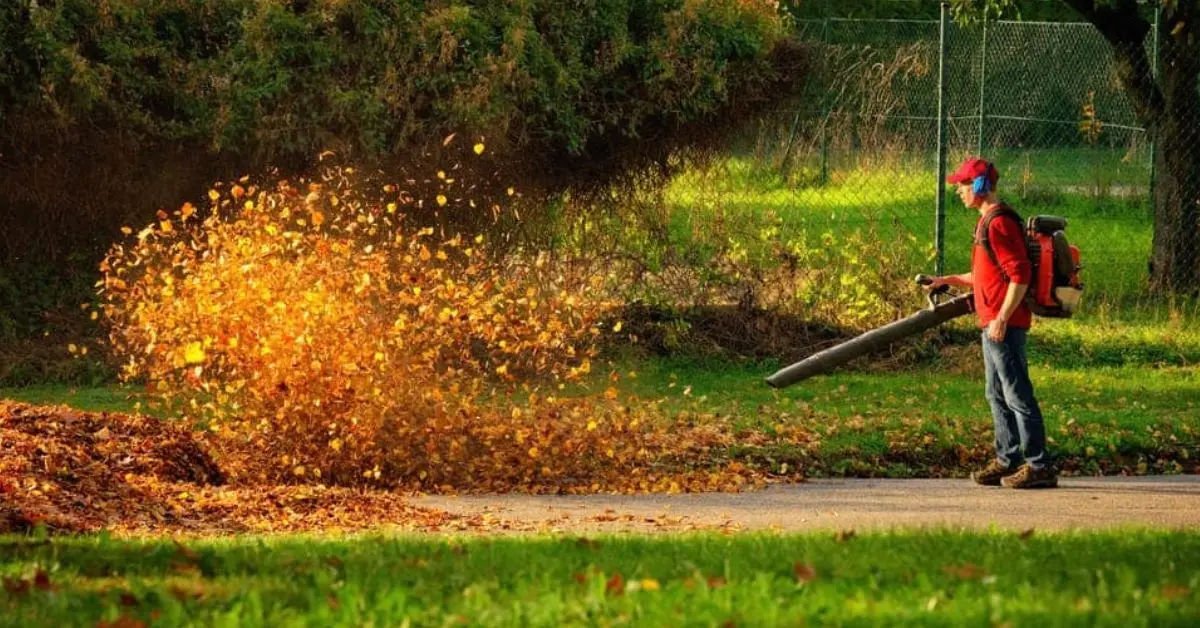
When I turned 18, I worked maintenance at a private club and lost that quiet connection. The job entailed clearing a foot path every morning—with a gas-powered leaf blower—whether it was needed or not. Usually, just a few scattered leaves and twigs would accompany the machine’s shriek. My ears would ring for hours and guests walking the trail would wince when they passed. It felt absurd. Undoing what nature did overnight and taking a scorched earth approach in doing so.
I didn’t last at that job very long.
The experience nonetheless stuck with me. Something as simple as a few leaves seemingly warranted an act of noise and air assault. Growing up, I learned that leaf litter feeds the soil, shelters insects, and protects roots—yet here I was burning fuel, decimating the environment, and mutilating my ears just to erase that. How ironic.
While this may sound like an overdramatization, my scolding of gas-powered leaf blowers may even be generous.
For starters, gas-powered blowers blow air exceeding 200mph and operate at between 85-125 decibels. Exposure to sounds over 110 decibels can cause permanent hearing loss in just two minutes, according to the CDC.
The noise pollution isn’t just dangerous for humans, either. Birds communicate in very similar frequency ranges, and gas-powered blowers often mask their calls. Calls for mating, alarm, and territory marking become harder to hear.
The loud noises from blowers also trigger flight responses in birds. A study conducted by Behavioral Ecology highlighted that birds exposed to continuous noise showed diminished responses to predatorial cues in nesting birds—their natural defense mechanisms were compromised due to noise pollution. A study published by Nature also found that noise pollution leads to reduced reproductive success in birds.
In addition to being grotesquely loud, air pollution emitted by gas-powered leaf blowers is perhaps even more detestable.
A report by U.S. Public Interest Research Groups Education Fund estimates that lawn and garden equipment powered by gasoline and other fossil fuels released more than 30 million tons of carbon dioxide into the atmosphere in 2020—more than all the greenhouse gas emissions from the city of Los Angeles.
Speaking of Los Angeles, most are appalled to learn that running a gas-powered leaf blower for just 30 minutes emits the same amount of hydrocarbon emissions released by a Ford F150 driving from Maine to LA.
Apparently, that debris I was tasked with scattering came with the ecological toll of a cross-country road trip.
And again, these aren’t just dead leaves we’re dispensing when were complicit in such irresponsible acts—they’re living, breathing environments.
Delicate creatures such as luna moths and swallowtail butterflies disguise their cocoons and chrysalises as dried leaves. Even the U.S. Dept. of Agriculture agrees: “the leaves serve as a habitat for wildlife including lizards, birds, turtles, frogs, and insects that overwinter in the fallen leaves,” according to their site.
Hope on the horizon, although you don’t have to wait
The one bit of hope I’ll leave you with is that public attitudes appear to be shifting. Across the U.S., more than 200 cities and towns have banned the use of gas-powered leaf blowers.
Norwalk, a Connecticut city adjacent to where Friends of Animals is headquartered, passed a year-round ban on gas-powered leaf blowers in Oct. 2023. Unfortunately, enactment still hasn’t taken place, as landscapers were allowed a too-lengthy grace period to replace their current, superpolluting equipment.
The good news, though, is that we don’t have to wait to start doing the right thing.
If the idea of completely surrendering your property to nature isn’t for you, then start smaller. You don’t need to take a scorched earth approach, just tidy up what you can. Pick up a rake. You’ll never know what sort of connection is waiting for you in your own backyard.
Jack Keller is the communications director for Friends of Animals.