

By Jack Keller
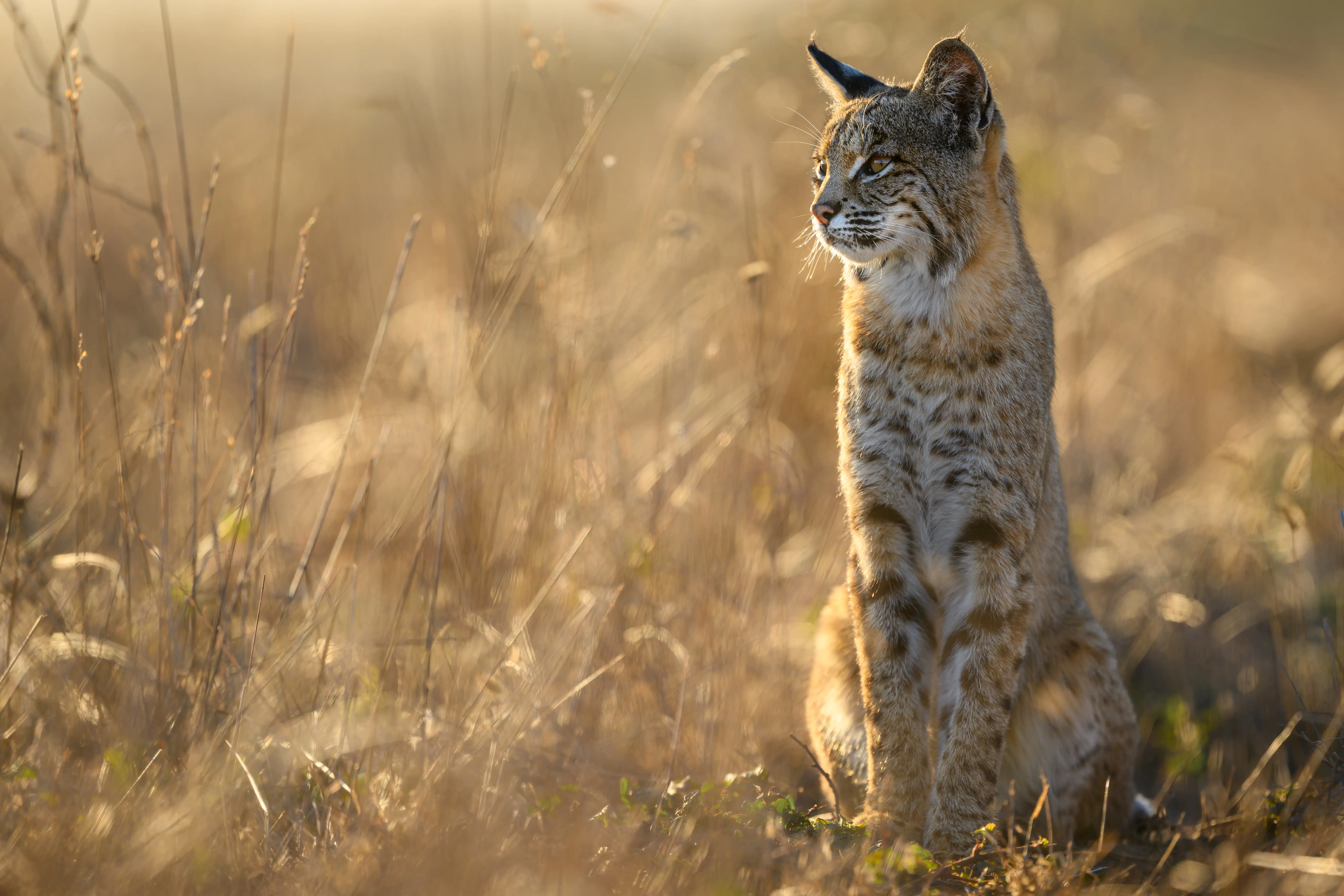
Nextdoor, the hyper-local social media platform, is rife with comments about bobcat sightings. For the most part, commenters seem to agree that these are “beautiful animals.” One commenter even responded to a recent sighting remarking that they’re “right where we want them.”
However, some people can’t resist stoking fear and categorizing wildlife as a problem. “Any suggestion for keeping bobcats away?” one person posted. And a few dozen others engage in histrionics—pleading with people to keep pets safe from dangerous bobcats.
“A common misconception is that bobcats will eat pets or attack children,” said Sarah Killingsworth, a wildlife conservation photographer, filmmaker and program coordinator for Project Coyote, an organization dedicated to protecting wild predators. “Bobcats do not eat domestic pets—they may have conflict with pets, but if it happens, it is typically to defend their territory or protect their kittens.”
The truth is that bobcats don’t pose much of a threat to us but they do play an integral role in our ecosystems.
“Bobcats are a crucial part of healthy ecosystems,” Killingsworth explained, “and their absence typically leads to an imbalance in the ecosystem.”
Their absence is felt through an increase in rodents, rabbits and other small mammals like racoons and skunks, she said. This can pose disastrous threats to local plant life as these smaller mammals can overgraze and throw off a whole ecosystem’s balance as a result.
Despite the benefits of having them around, bobcats are persistently hunted across the country—all but 12 states allow some form of bobcat hunting. And while all hunting is a crime against nature, the greed involved in slaughtering bobcats makes it even more vile.
No bag limits in most states mean that trappers enter the woods much like a kid stepping into a cash grab booth—catch as many dollars as you can before the time runs out—all green lighted, for the most part, without data on existing bobcat populations.
Bobcat traps are completely unselective and frequently capture other species like lynx, foxes, badgers, opossums, otters, raptors and so many others. Nobody knows exactly how many non-target animals are killed by bobcat traps, since the data is reliant on hunters self-reporting. Can you really imagine those guys going to the trouble?
America’s bobcats are being slain, sold and sewn into gaudy jacket trims and ugly scarves. The least we can do is stand up for them in our own neighborhoods and make sure they are not being misrepresented as threats to our communities.
If you witness someone telling the wrong narrative about bobcats, educate them.
I asked Killingsworth if there was one thing she would want the public to know about bobcats.
“That females are devoted, dedicated mothers with strong bonds to their kittens. Mother bobcats work very hard every spring and summer hunting enough prey to feed their litter and teaching them to hunt into the fall.”
Now that’s the narrative worth sharing.
Jack Keller is communications director for Friends of Animals.