

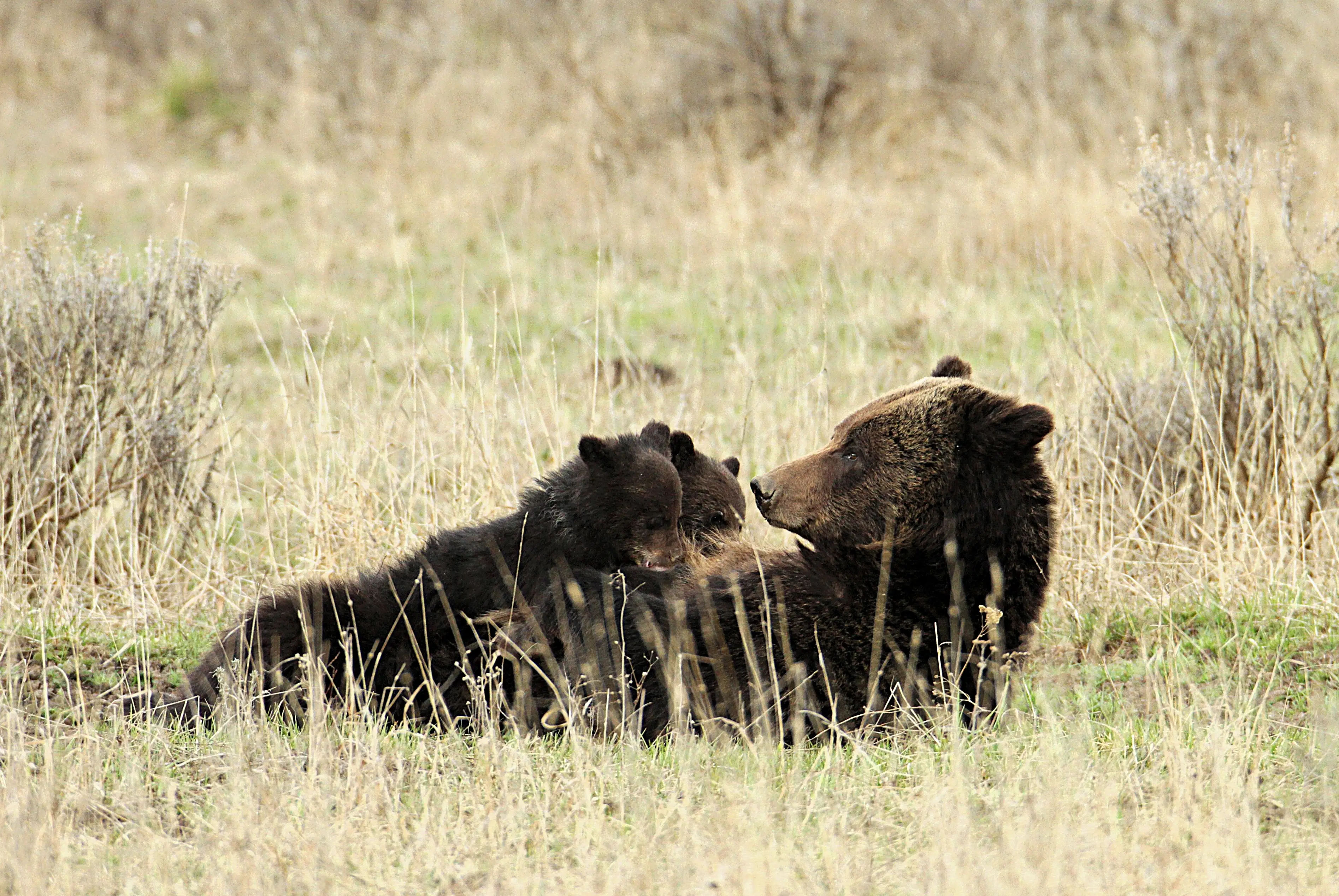
Earlier this month, the Trump Administration announced a revised Endangered Species Act rule that would make it easier to kill grizzlies in the lower 48 states where they are currently protected. Not surprisingly, the meat industry and its cronies who are trying to speed up grizzly bear delisting in Montana, Idaho, and Washington are thrilled about the proposal.
But Friends of Animals is not.
That’s why we are submitting comments to the U.S. Fish and Wildlife Service opposing the proposal and we are asking our supporters to do the same. The public comment period is open until Aug. 17. You can submit a comment here: Federal Register :: Endangered and Threatened Wildlife and Plants; Grizzly Bear Listing on the List of Endangered and Threatened Wildlife With a Revised Section 4(d) Rule; Proposed Revision of the Protective Regulations Under Section 4(d)
WHY GRIZZLIES NEED TO BE PROTECTED
It is well established that grizzly bears are a keystone species and vital to a healthy and thriving ecosystem. As a predator, grizzlies play a role in managing the populations of the species upon which they prey (deer fawn, moose calves, mice, fish, etc.) maintaining a healthy balance of wildlife.
Interestingly, 90% of a grizzly bear’s diet consists of plants, berries, nuts, roots, and insect matter. So they spread seeds through their eating and traveling patterns and help aerate the soil while rooting for sustenance, thereby playing a critical role in the ecological health of plant life. Spreading seeds and assisting in health plant ecology assists not only the grizzly bear population, but also the wildlife that relies on that plant life.
U.S. Fish and Wildlife should prioritize protections for grizzly bears over cattle and sheep grazing. Grizzlies shouldn’t be killed to placate the livestock industry, which has decimates all wildlife while exploiting our public lands for its own greed.
Historically grizzly bears ranged from Alaska to Mexico, with an estimated 50,000 bears occupying the western half of the contiguous United States. Today grizzly bears occupy just 6% of their historical range in the lower 48 states, surviving in four isolated locations in the northern Rockies, where the current population is just over 2,000 bears. Grizzly bear numbers in and around Yellowstone and Glacier national parks have improved since the animals were first protected in 1975. But the bears continue to be threatened by isolation from other grizzly populations and human-caused deaths.