

By Jack Keller
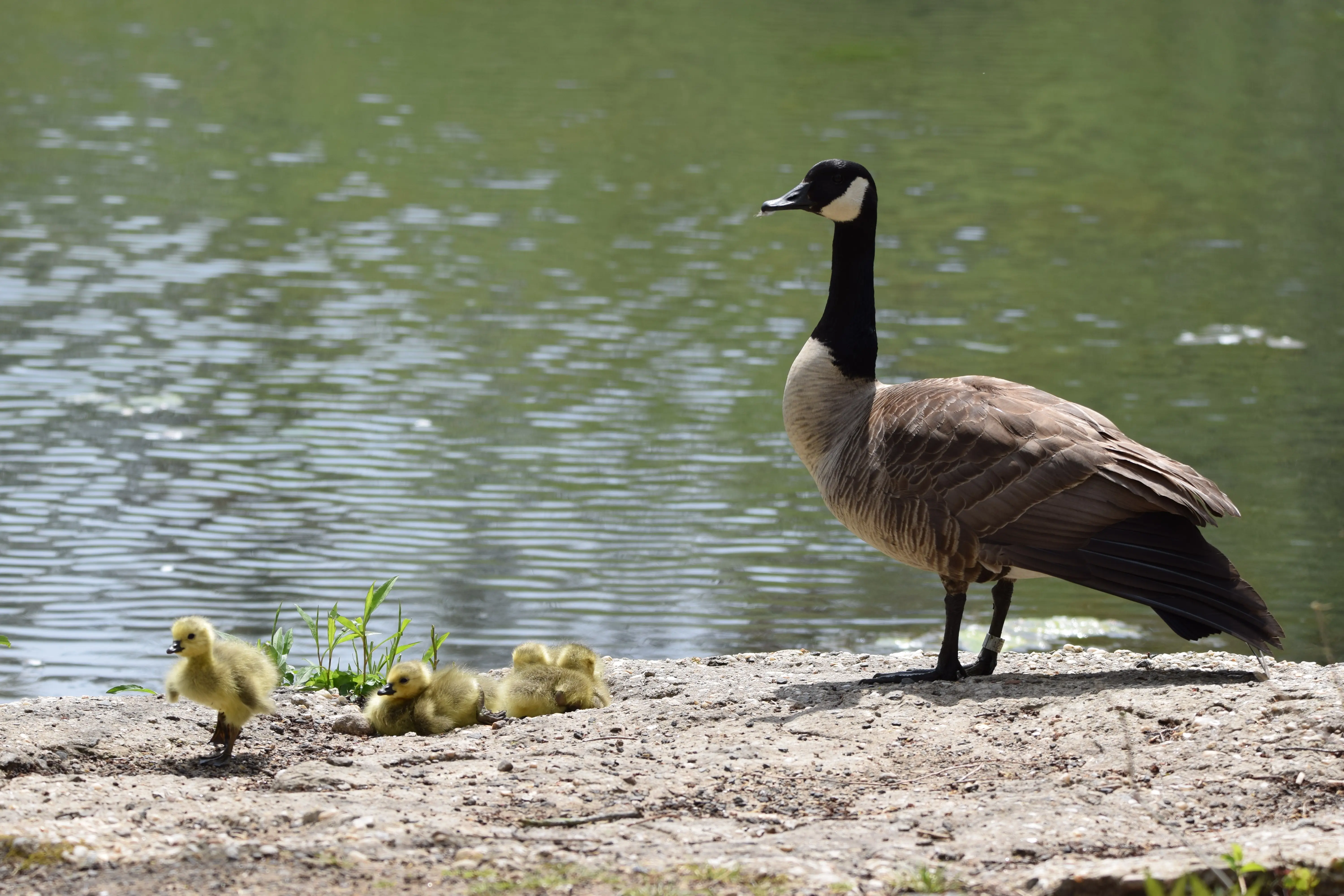
Gosling season is already here! Geese, finally back north after a long winter, are welcoming this year’s brood into the world.
In the last week, this blogger has been inundated with photos of adorable goslings following their mothers around, from Denver, to Stamford, to Central Park and so many more green spaces in between. It’s hard to not stop and gander when you, well, spot a baby gander!
This post, from our allies at New York City’s Wild Bird Fund—NYC’s only wildlife rehab center which cares for injured, sick, or orphaned birds and small animals—reminds us that cuteness comes with fragility, though.
WBF shared a photo of two recently-born-and-then-admitted goslings who’d been, upsettingly, separated from their families. WBF is planning to release the pair into the care of a wild Canada goose foster family; the caretakers keeping their faces covered and avoiding as much contact possible to prevent imprinting. We’re hopeful they’ll return to the goose world soon.
The cute photos and heartwarming story tell only part of the story. Much of the heroism here comes from the severe precautions taken to defend against imprinting.
Imprinting happens when goslings are freshly hatched, and their brains are especially receptive to forming attachments. They often, instinctively, follow some of the first large, moving objects they see, which is—hopefully—their own mother, but can sometimes be a human.
Inhibiting their ability to bond with their own species, imprinting sometimes even causes birds to lose their ability to mate. They’re instead attached to humans, and this is generally considered irreversible.
This risk underscores the reality: that human observers should stay far away from goslings, and never care for a gosling themselves, even briefly.
A gosling parent probably wouldn’t let you get too close, even if you tried. The moms (geese) and dads (ganders)—yes, they raise their young together, and are even monogamous, returning to the same grounds to nest each year—are notoriously aggressive, but especially when they feel their young are being threatened.
The warning signs of a goose attack are things everyone should be mindful of, for both yours and the goose family’s safety: they’ll bend their heads and necks to display aggression, they’ll pump their heads up and down to signal they’re about to attack, and they may even hiss or honk.
If you’re ever caught up in this, simply back away, slowly. Don’t run. This aggression significantly diminishes as the goslings grow older and learn to fly, so this is the time of year to be mindful.
As the goslings do get older, each growth stage becomes its own sight to behold.
Hatchlings are born donning a coat of yellow and grey down and ready for the world. Unlike many other birds, there is no nestling stage; within hours of escaping the egg, they’re up walking in a line and following their parents.
Spending their first few weeks gaining strength from nibbling on aquatic vegetation and walking around, it doesn’t take long for goslings to grow, and for the first signs of juvenile feathers to appear, usually after just a few weeks.
At just seven to ten weeks, young geese are almost indistinguishable from their parents, especially since this is when they’re beginning to fly.
This is also around when molting season begins for the adults. From late June-early August, adults shed their flight feathers to grow newer ones, meaning they’re grounded and unable to fly, and vulnerable to predators and other threats.
Growing up is a summer-long process, the young geese staying with their family and learning how to forage and navigate migration routes. By the time the late summer is here, the skies will be crowded, and the adults lead training flights, teaching V-formations and energy conservation. These skills aren’t innate, they’re passed down through generations.
By the fall, the young geese are ready to migrate south. But eventually, when fully mature, the now-adult goose will return, often to the very place where they themselves were hatched, restarting the process.
Yet, for many goose families, that process never restarts; in cities across the country, geese are routinely round up and killed, during their molting season—when they cannot fly to escape—as a part of shortsighted population control problems.
Friends of Animals recently intervened in Buffalo, where an HOA was actively facilitating a Wildlife Services roundup for this coming June.
FoA also stepped in for geese in Bristol, Connecticut, where the city was planning on gassing the city’s geese population who were scapegoated for leaving droppings behind in a park. The city, instead, elected to use street sweeping machines to clean up after the birds.
FoA even sued FWS over a draconian effort to kill over 1,600 geese in Denver, back in 2019.
All over the country, geese are vilified for being geese.
Geese return to the same nesting grounds year after year; it’s their community just as much as ours. And none of these efforts would have been possible without a concerned citizen sounding the alarm, recognizing that their community’s geese were under siege.
So, yes, be on the lookout for your new gosling neighbors this spring. Their future might just depend on you.