

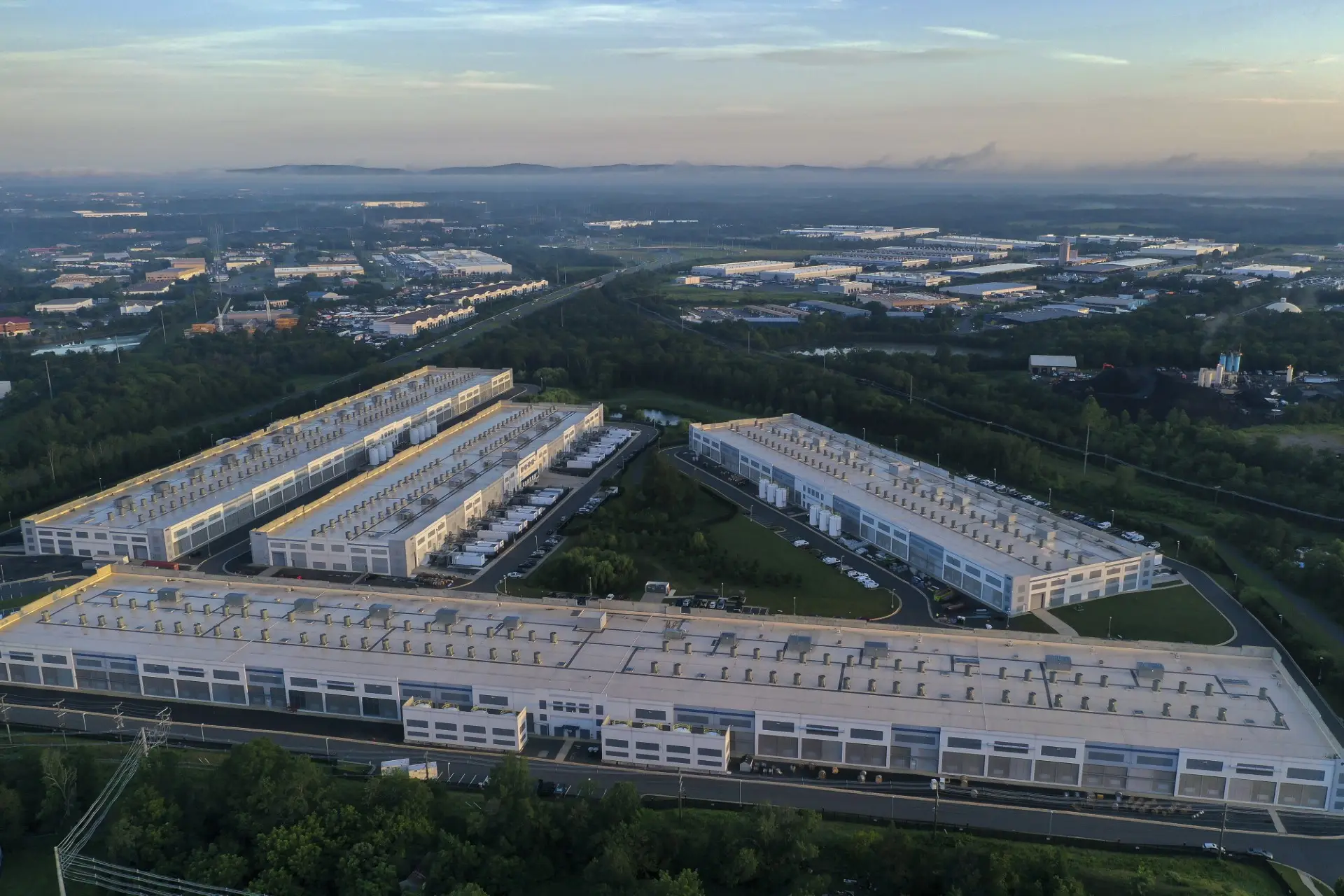
The AI industry is scrambling to win back over an electorate, which overwhelmingly voted to restrict data center projects across the country. Of the roughly 40 cities and towns where data centers were on the ballot, at least 33 voted against the industry and for new regulations and even outright bans.
Polling from NBC News found that for 56% of respondents, AI and data centers were “crucial” in their midterm vote. Another poll from UMass Amherst, published earlier this year, found that just one in nine Americans would support AI data center construction in their local communities.
Texas has gained attention in recent years for the state’s quick-and-sudden-embrace of its “data center capital of America” moniker. Amazon recently announced plans for a new data center there, to be powered by a massive gas-powered power plant; as planned, the plant would be permitted to release 33 million tons of carbon dioxide a year, which would make it the single largest source of climate pollution in the U.S. So, it’s no wonder that the data center conversation found itself at the center of Texas’ recent governor race.
Gov.-elect Gina Hinojosa took the issue directly to incumbent Greg Abbott, attacking him for his previous comments hailing Texas as becoming the “epicenter of AI development.” The electorate clearly took those comments into consideration, as Hinojosa pulled off the stunning upset last week.
Yes, voters said no to data centers. But that’s not stopping the Trump administration from wanting to build the super polluters on public lands. The Washington Sun reported in September that the administration is currently considering proposals for at least 12 data centers and/or data center-related projects—such as access roads and water pipelines. The proposals cover at least 17,600 acres of public lands across six states, Arizona, Idaho, Nevada, Oregon, Utah, and Wyoming.
The administration has tasked The Bureau of Land Management (BLM) with identifying lands most suitable for new projects.
BLM’s corruption, apparently, knows no bounds: the agency has long been the bane of FoA’s existence. Their ‘balancing’ of public lands usage typically entails pimping out a parcel to the bloodletting meat industry and leaving wildlife to fend for itself.
Treating the construction of new, polluting data centers as just another public lands “use” they’re tasked with “balancing” is a new low for even the corrupt BLM, though.
And ‘corrupt’ may only scratch the surface. ProPublica reported, just last week, that much of Secretary of the Interior, Doug Burnum’s wealth is tied to AI companies. Much of his wealth is held in the investment firm Arthur Ventures, and that “between $18.1 million and $64.4 million of those investments are in AI companies.”
When he became the Sec. of Interior, Burnum agreed to resign from his position at AV. But he was never forced to, and never did, give up his financial interests at the firm.
ProPublica’s reporting insists that this conflict of interest doesn’t end with Burnum. An estimated 380 of Trump’s political appointees (or their spouses) hold stocks or other financial commitments to Nvidia.
Is it really any wonder that this administration is pushing for data centers on public lands?
Much of the groundwork for AI data centers on public lands has already been put in place. A 2025 executive order, Accelerating Federal Permitting of Data Center Infrastructure, directed agencies to utilize federally owned land resources for the “expeditious” development of data centers.
But this mad rush to construct data centers on public lands is, well, mad.
A 2025 study published in the journal Carbon Neutral Systems found that the expansion of data centers puts pressure on terrestrial ecosystems through “land occupation,” and “habitat fragmentation,” one of the single most odious threats facing animals worldwide, hindering their ability to move across their range, find food and mates, and maintain healthy populations.
Bloomberg News also found that roughly two thirds of data centers constructed since 2022 are in places already facing high levels of water stress. In other words, these facilities are increasingly being built in places where wildlife is already dependent on the same finite water resources.
It should also be mentioned that the nonrenewable energy sources that power data centers are good candidates to intensify pollution.
One of the proposed data centers on public lands, proposed by Arevia Power, is a 4,000,000-square-foot multi-building data center to be built on 3,226 acres of public lands south of Boise, Idaho.
This project would include a natural gas power generation facility. Again, on public lands.
Do the techno-futurists building these things even care that they’re turning back the clock to fossil fuels that are well-documented killers of animals, people, and even the planet?
After Tuesday, there’s only one sure thing when it comes to data centers: they’re incredibly unpopular.