

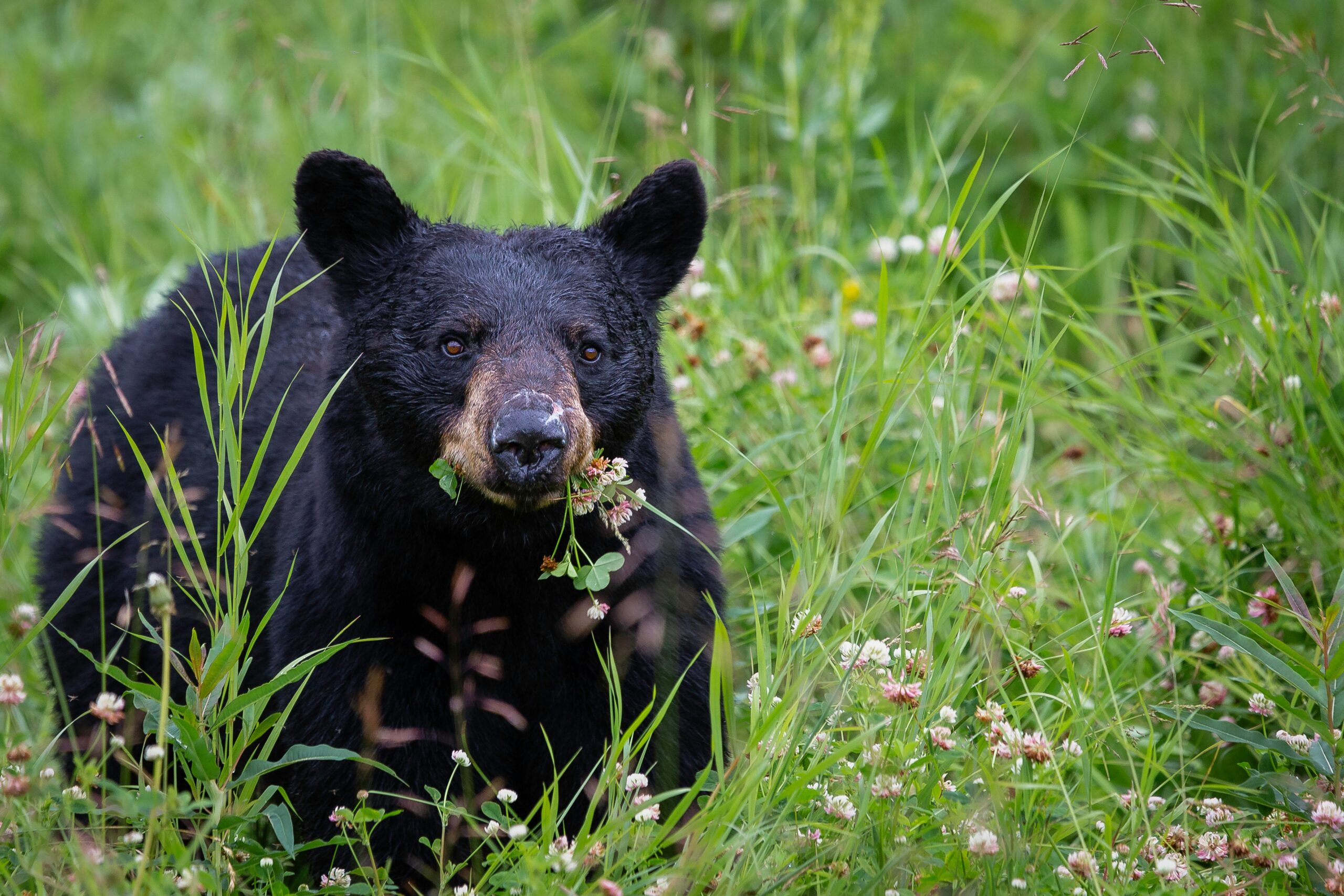
The first day of Spring was March 20, and World Bear Day was March 23, so we here at Friends of Animals—we’re part of the CT Coalition to Protect Black Bears—have protecting bears on our minds.
Black bears are emerging from dens, a sign that this long winter is finally behind us.
While some bears leave the den for good this time of year, others just hit the snooze button—they’ll leave to stretch their legs and move around and then return to the den to go back to sleep.
They’re coming out skinny, groggy, and hungry since they lose more than 30 percent of their body weight and because their heart rate slows to just 8-10 beats per minute. By the way, bears experience a less extreme form of dormancy than other hibernators, where they can awaken quickly and respond to stimuli, such as changes in temperature or the presence of predators. So you should always be bear aware if you live where bears live.
During spring, bears are getting their bearings and drinking lots of water, sometimes even eating leftover snow if there’s no water available. They like to ease into the warmer weather, so once they’re up and eating, they won’t go straight for substantial meals. Typically, they’ll nibble on plants that provide some roughage to help clear their digestive system; they don’t eat drink or use the bathroom while denning, so this is necessary.
This time of year, it is important to make sure you’re discouraging hungry bears from visiting your yard. Human-caused bear conflicts are preventable.
For example, in Connecticut where Friends of Animals is headquartered, of all the bear “conflict” reports from 2024, 654 involved bird feeders, 1,563 involved trash cans, 133 involved livestock (mostly chickens), 60 involved beehives, and 64 involved agriculture.
The good news is you can help keep bears wild and humans and bears safe by following these tips from the Coalition and our allies at BearWise, an informational group made up of bear biologists to helpcommunities peacefully coexist with bears.
Remove bird feeders
Remove birdfeeders March through November. As the weather warms up, insects are more abundant, and young birds are learning to find naturally occurring foods wherever available; birds don’t necessarily need the bird food they relied on in the winter.
Bird feeders are calorie dense and easily accessible, so it’s no wonder that bears love them. But, like every other easy, human-derived food source, it can lead to habituation; a phase where bears become comfortable around humans.
If you want to attract birds to your yard, add a water source and perhaps nesting boxes, and plant flowers, bushes, and trees native to where you live.
Secure trash
There are “interesting smells” that come from trash cans, and although they don’t seem attractive to us, they can attract bears from a pretty long distance—experts say bears can smell food from more than two miles away.
That means they can smell the pizza box sticking out of the recycling bin.
If you live where bears live wait until the day of pick-up to put trash out and use bear-resistant trash cans. Mama bears are intelligent and can teach their cubs how to get into trash bins and bird feeders, and it keeps getting passed from generation to generation.
Use electric fencing
If you have outdoor animals, compost piles, or gardens, the most effective way to keep bears out is a properly installed, grounded and maintained electric fence. Get an energizer that outputs at least 6,000+ volts. Output joules should be at least 0.5. Metal wire or polywire are good choices for fences. Use a minimum of 3 strands of wire (5 or 6 are better).
Do an inventory of what’s on your property that can attract bears
Make note of what you’re storing on your property: is there anything that might be baiting a bear?
Besides bird seed and trash, pet food, unwashed grills, and even antifreeze can attract bears. Make sure these things are secured in a sturdy locked building bears can’t access; under the porch won’t do.
Clean your grills after each use; a greasy grill might look like a mess to you, but to a bear it’s an easily accessible source of food.
Feed pets indoors, if possible. If not, store bowls and food inside when not in use.
In the case of antifreeze, always double bag it and carefully store it, as it is highly poisonous (for both people and bears), despite smelling and tasting sweet.
Mind your vehicle
Bears are attracted to vehicles because of the smells of food wrappers, trash, and other consumables. Even a gum or mints in a cup holder have been enough to entice a bear.
It’s important to be in the habit of clearing out cars and carefully securing them, too; roll up your windows, and especially lock your doors, always. Bears can actually open unlocked car doors to let themselves in. But, when the doors shut behind them, they can’t get out.
When out hiking
If you’re out hiking where bears live, pay close attention to your surroundings. Use bear bells, carry bear spray and keep dogs on leashes to ward off encounters. If you surprise a bear, back away and leave the area.
If a bear is in your sight and is getting animated, snorting and swatting and letting you know you are too close, make yourself tall and large, make a lot of noise by yelling and waving your arms. Don’t run.
When using bear spray, aim for just above its head so the liquid falls into its eyes.
You can download our “How to bear it in black bear season” brochure here.