

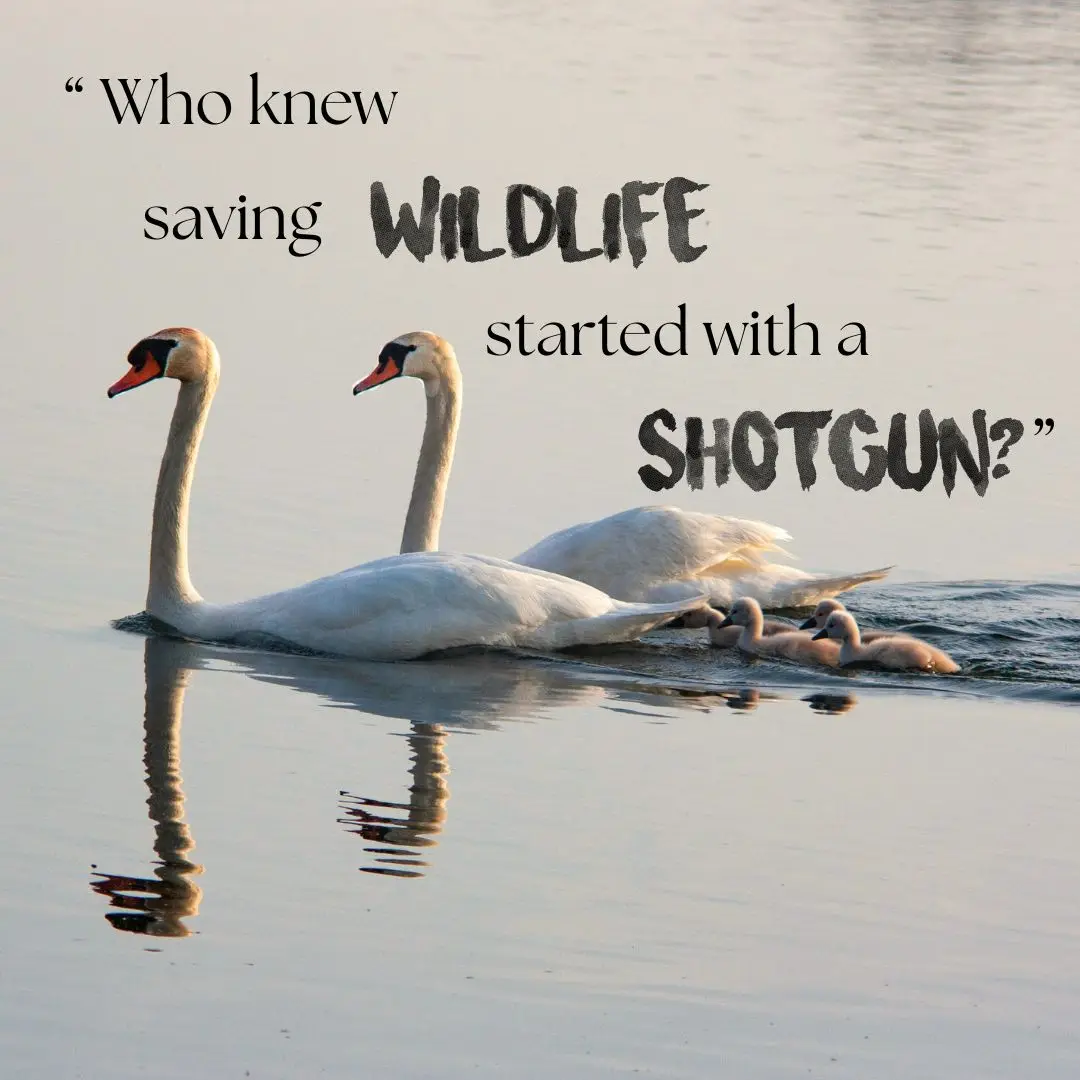
Andrew Engilis, a museum curator at the University of California, Davis told State Affairs “I’d say the species [mute swans] has really exploded.”
Apparently, expert opinions read like casual riffs.
Engilis was reached for comment after California recklessly signed AB764, a cruel bill that allows landowners and hunters to kill iconic mute swans, into action this week.
Friends of Animals submitted testimony in attempts to kill the measure but California’s catering to hunters couldn’t be competed with this time around.
Engilis did what all hunters and their apologists do when pressed to reinforce violence: lie.
Time and time again, they repeat the same sentiments: that mute swans consume too much submerged aquatic vegetation (SAV), oust other wildlife and are even “pretty nasty,” at least according to one retired FWS program head.
Personal vendettas and propaganda are pushing California’s mute swans into the crosshairs.
For California’s 40 million residents, it only has about 236,300 hunters—fewer than one percent of Californians, among the lowest per-capita numbers of any state.
They’re a loud, vocal minority: they’re intent on spreading misinformation about mute swans.
But there’s no demonstrable evidence of destruction of submerged aquatic vegetation (SAV), displacement of native wildlife and degradation of water quality. Hunting apologists fail to admit that loss of SAV has to do with runoff containing significant concentrations of nitrogen and phosphorus from fertilizers, pesticides and industrial and animal waste.
Not to mention a lot of waterfowl consume aquatic vegetation.
When such smear campaigns are successful—and, not to mention, amid government shutdowns, nation-wide protests and international turmoil—ignorant lawmakers blindly back lethal measures.
The same apologists have pointed out that SAV beds are important for sustaining less abundant duck species such as the redhead, pintail and canvas beak. Yes—the same species that the state allows hunters to gun down in Suisun Marsh.
The same Suisun Marsh—a sprawling complex of wetlands—that the state says most of its mute swans inhabit. The same Suisun Marsh that is famously home to over 150 duck hunting clubs.
Who knew saving wildlife started with a shotgun?