

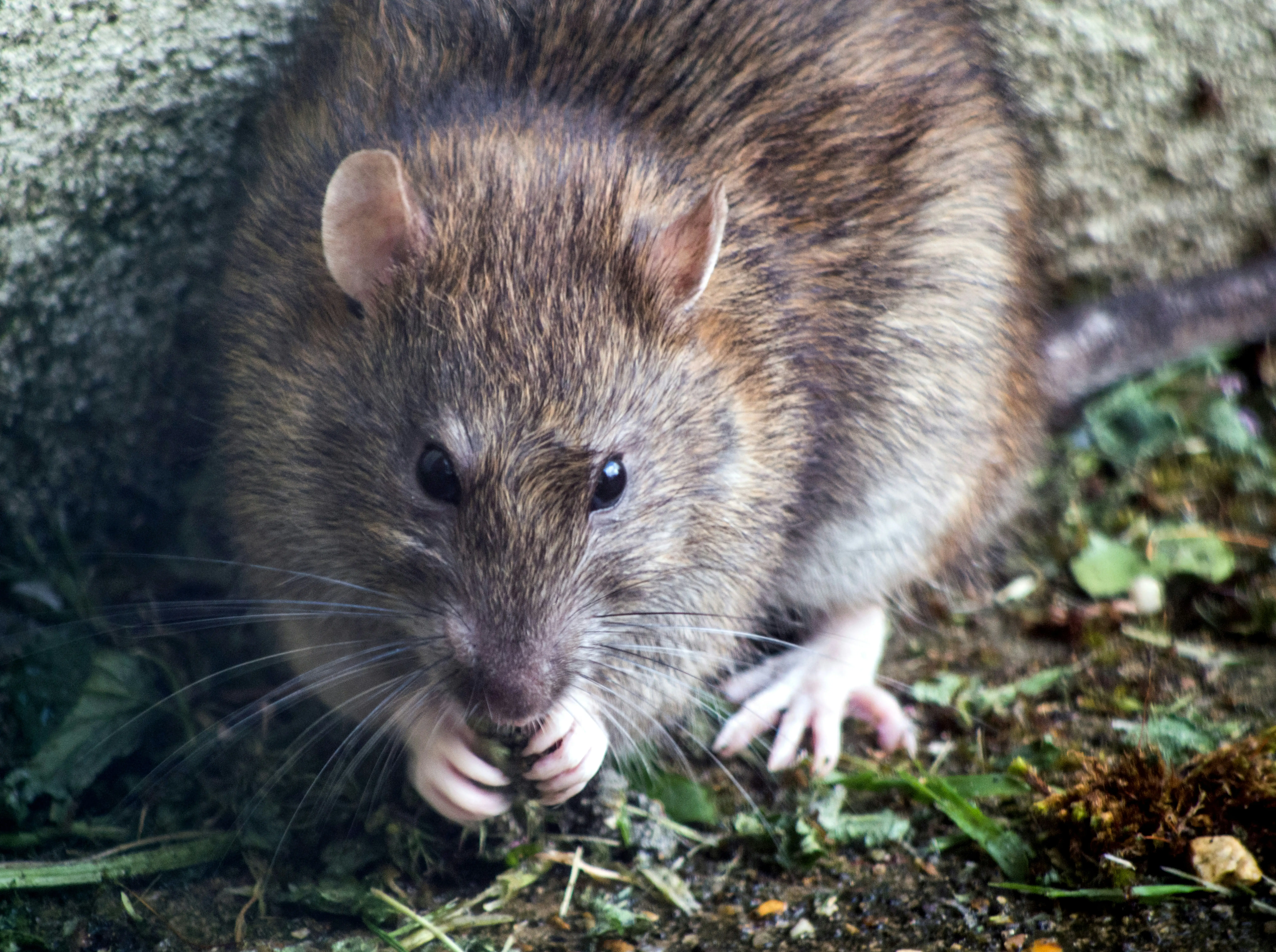
Since Friends of Animals has been working tirelessly to get the sale and use of second-generation anticoagulants banned in Connecticut—a bill we modeled after California’s moratorium that passed in 2020—we’ve had to deal with the lies and fear mongering tactics of the pest control industry.
One lobbyist even sent an email to CT legislators claiming a rise in human cases of hantavirus in California. The truth is the reporting of cases provided by the Center for Disease Control suggests that overall hantavirus cases in humans, in California, are not increasing. In fact, since the introduction of California’s legislation, cases in humans have decreased. It’s worth nothing that hantavirus is also passed predominantly from deer mice to humans (via feces and urine), and not Norway rats or roof rats (often the main “targets” of rodenticides).
With hantavirus in the news because of a cluster linked to cruise ship travel, we acknowledge there’s been an uptick in concern about rodents and calls for rat poisons to supposedly control the outbreak. With the help of our ally Laura Kiesel, founder of Save Arlington Wildlife, who has a background in wildlife biology and holds a master’s degree in natural resources management and policy, we’d like to clear up some confusion.
The hantavirus that has been in the news has been identified by scientists as the Andean hantavirus. It is found primarily in Argentina and Chile, where it is carried mainly by the long-tailed pygmy rice rat. The Andes virus is the only hantavirus known to spread between people. It’s completely different than the strain endemic to the United States.
While the first person who contracted it likely did from breathing aerosolized particles of these rodent’s droppings–after that, contagion was person to person (so it’s not being continually spread by rodents after that Patient 0) on a cruise ship.
FYI, doubts are growing over the theory that two birdwatchers’ trip to an Argentine landfill sparked the hantavirus outbreak. A researcher who studies the ecology and biogeography of infectious diseases told Scientific American that based on the incubation period of the virus, which ranges from four to 42 days, the couple might have gotten infected in Chile.
More to be revealed.
The Andes virus is the ONLY strain of hantavirus known to be spread person to person after the initial infection, but usually people need to be in closer quarters for extended periods of time–say again, like on a cruise, or living together in a lockdown, or in an institutional setting etc.
Let’s be honest. Rat poisons can’t kill every rat and can’t kill off a single wild rat living in a very forested area of a remote region—poisons wouldn’t have stopped this.
The hantavirus we have here in the US is different as the only way a person can be infected is from a rodent (again breathing in feces particles). But it is primarily spread to people by deer mice and in RARE cases Norway rats. While Norway rats can carry a specific type of hantavirus called the Seoul virus—which causes kidney disease rather than respiratory failure—human infections from this source are rare.
Hantavirus is exceedingly uncommon, with only about two dozen cases reported in the US per year. These cases are pretty much entirely relegated to the western region of the country, usually the American Southwest as the disease thrives more in hot, arid conditions. It is nearly non-existent on the East Coast and New England.
Some may recall that Gene Hackman’s wife tragically died of hantavirus last year. While we can understand why that might alarm people, Kiesel put that incident in perspective, too.
The Hackmans resided in the Southwest (New Mexico) and had a severe mouse infestation where droppings were reported to be widespread through their compound. (Rat nests were also found on the property.)There was not a lot of upkeep of the compound—and so the overwhelming amount of droppings polluted the air and there was little ventilation. While transmission can happen from a single mouse—usually it’s these severe infestations with a lot of droppings polluting the air in poorly ventilated spaces that pose more serious risks for contagion.
Again, the disease is rare. You are more likely to get hit by lightning than get the US strain of hantavirus. If you are in New England, your chances are nearly nil.
Do you know what we all have a much higher statistical chance of getting? Exposed to or sickened by rat poison. Thousands of people have exposure to rodenticides every year in the US. Some get sick. Some even die.
Rat poison is bait and lures rodents into an area. It lowers their immune systems and in some cases, studies suggest make the rodent more likely to have and spread certain disease (like Lepto).
Poisoning makes rodents more likely to die in areas of high foot traffic in proximity to kids and pets, so that whatever diseases or parasites they are carrying can more easily find a new host (again like that kid or pet near them that are curious about that fluffy thing on the ground writhing).
If you want to not get a disease by a rat or mouse, the best way is to remove attractants that draw them to your properties and get some good exclusion work done so they can’t enter the home. Sanitation and exclusion actually keep rats and mice away.
On the contrary, SGARs will never solve the problem—they’re counterproductive because the yummy poison-filled bait keeps attracting new rodents to a site. Pest control companies don’t want to solve the problem—they want the guaranteed repeat business—they’re making a mint off their contracts with homeowners.
Poison doesn’t stop rodents from defecating and urinating when they are on your property or in your home. It even can accelerate excretions when the animal is in its death throes from AR intoxication.
Rat poisons aren’t going to solve or stop hantavirus, especially this strain that is now just being transmitted from person to person as a communicable disease.
Also, as Dr. Bobby Corrigan, one of the leading rodentologists in the world told Kiesel during an interview—there has never been a single case where public health threats and disease outbreaks related to rodents were solved by poison. The things that helped quell the problem? Again, improved sanitation and weatherizing buildings.